
Online Shopping Website Pricing: Beginner to Advanced Stores in 2026
Posted on
Web Design
Posted at

Table of Contents
Introduction
What Is an Online Shopping Website?
Types of Ecommerce Websites
Beginner Ecommerce Store Pricing
Small Business Ecommerce Website Cost
Medium Scale Online Store Pricing
Enterprise Ecommerce Website Cost
Shopify Store Pricing
WooCommerce Website Pricing
Magento Ecommerce Development Cost
Custom Ecommerce Website Pricing
Multi-Vendor Marketplace Development Cost
AI-Powered Ecommerce Website Development Cost
Ecommerce Mobile App Cost
Ecommerce Website Maintenance Cost
Hidden Costs of Ecommerce Websites
Cost Based on Industry Type
Ecommerce Website Features & Their Pricing
Payment Gateway Charges
Hosting & Server Pricing
SEO Cost for Ecommerce Websites
Ecommerce Marketing Budget
Cost Comparison Table
Beginner vs Advanced Ecommerce Store Comparison
How to Reduce Ecommerce Development Cost
Latest Ecommerce Trends in 2026
Why Businesses Are Investing in AI Ecommerce Stores
How to Choose the Right Ecommerce Development Company
FAQs
Conclusion
Introduction
The global ecommerce market surpassed $6.8 trillion in 2025 — and it's not slowing down. By the end of 2026, analysts project that nearly one in every four retail dollars spent worldwide will flow through an online store. Whether you're a first-time entrepreneur selling handmade crafts or an enterprise retailer managing 50,000 SKUs, one question sits at the top of every planning conversation:
How much does an online shopping website actually cost?
The honest answer: it depends on a huge number of variables. And that's exactly why this guide exists.
Most pricing articles give you a vague "it could be $500 or $500,000" answer and leave you more confused than when you started. This guide does the opposite. We break down ecommerce website pricing at every level — from budget DIY setups to fully custom AI-powered enterprise platforms — with real numbers in both USD and INR, platform-by-platform comparisons, hidden cost warnings, and practical advice from people who've built hundreds of stores.
If you're planning to invest in an online store in 2026, this is the only pricing guide you'll need.
What Is an Online Shopping Website?
An online shopping website Cost — also called an ecommerce website or online store — is a digital platform that enables businesses to sell products or services to customers over the internet. At its core, it combines a product catalog, shopping cart functionality, secure payment processing, and order management into a seamless buying experience.
But in 2026, the definition has expanded dramatically. Modern ecommerce websites include:
AI-powered product recommendations that learn from browsing behavior
Augmented Reality (AR) try-on features for fashion, furniture, and cosmetics
Voice-search integration for hands-free shopping
Personalized storefronts that change based on user profiles
Automated inventory and fulfillment systems
Multilingual, multi-currency, and multi-region support
Understanding what you want your online shopping website to do is the first step in accurately estimating your ecommerce website development cost.
Types of Ecommerce Websites
Not all ecommerce websites are built the same. The type you choose directly affects your development cost, timeline, and ongoing expenses.
B2C (Business to Consumer)
The most common model. A business sells products directly to end customers. Examples: fashion stores, electronics shops, grocery delivery.
B2B (Business to Business)
Companies sell to other companies, often with bulk pricing, custom quotes, and account-level management. More complex and typically more expensive to build.
C2C (Consumer to Consumer)
Platforms like OLX or eBay where individuals sell to each other. Requires marketplace infrastructure and moderation tools.
D2C (Direct to Consumer)
Brands bypass traditional retail and sell directly to customers online. Requires strong brand-focused UX and marketing integration.
Multi-Vendor Marketplace
One platform, multiple sellers. Think Amazon or Flipkart. High complexity, highest development cost.
Subscription Ecommerce
Recurring billing for curated boxes, software, or membership products.
Headless Commerce
The frontend (what users see) is decoupled from the backend (the database and business logic), offering maximum flexibility and performance.
Beginner Ecommerce Store Pricing
If you're just starting out, you don't need to spend a fortune to launch a functional online store. Beginner ecommerce store pricing typically covers:
A pre-built theme or template
Basic product listing (under 100 products)
Single payment gateway
Mobile-responsive design
Basic SEO setup
Standard shipping integration
Beginner Store Pricing Overview
Store Type | USD | INR |
|---|---|---|
DIY (Shopify Basic / WooCommerce) | $300 – $800 | ₹25,000 – ₹65,000 |
Freelancer-Built Starter Store | $500 – $1,500 | ₹40,000 – ₹1,25,000 |
Agency-Built Beginner Store | $1,000 – $3,000 | ₹80,000 – ₹2,50,000 |
Best for: First-time sellers, side businesses, testing a product niche, small artisan shops.
What you get: A working online store — but with limitations. Limited customization, basic analytics, and typically no advanced features like AI recommendations, loyalty programs, or custom checkout flows.
Small Business Ecommerce Website Cost
Small businesses need more than a basic template. You're likely managing 100–500 products, running promotions, integrating with accounting tools, and wanting a professional brand presence.
Small Business Store Features Include:
Custom branding and professional design
Up to 500 product listings
Order tracking and email notifications
Blog / content section for SEO
Google Analytics integration
Basic loyalty or coupon system
WhatsApp or live chat integration
Small Business Ecommerce Cost
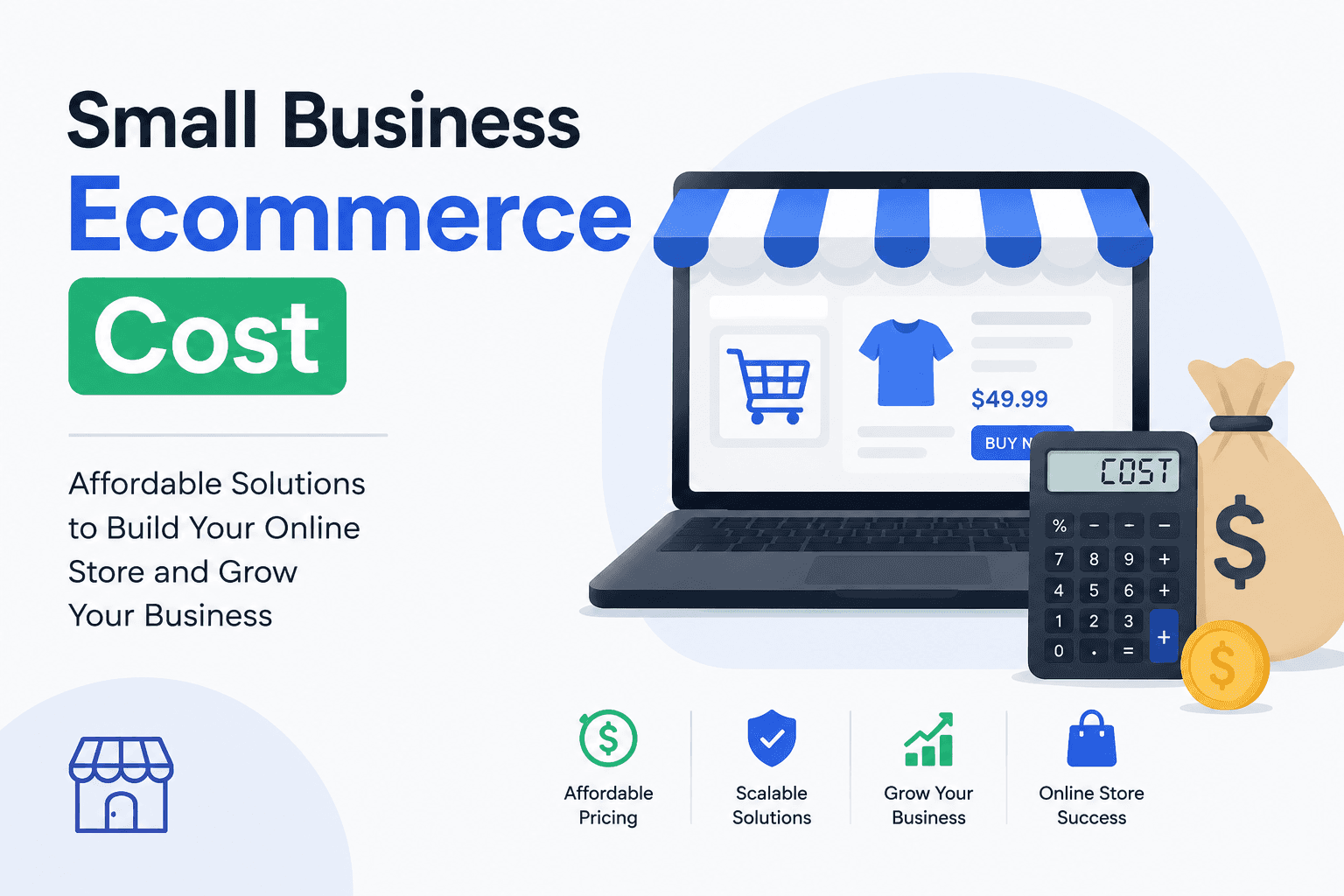
Development Route | USD | INR |
|---|---|---|
Shopify (Basic + Custom Theme) | $2,000 – $5,000 | ₹1,65,000 – ₹4,20,000 |
WooCommerce Custom Setup | $1,500 – $4,000 | ₹1,25,000 – ₹3,30,000 |
Agency-Built (Mid-tier) | $3,000 – $8,000 | ₹2,50,000 – ₹6,50,000 |
Annual operational costs (hosting, plugins, maintenance) typically add another $500–$1,500/year (₹40,000–₹1,25,000/year).
Medium Scale Online Store Pricing
At this level, you're running a serious ecommerce operation — likely with a team, a growing catalog, and more sophisticated customer experience requirements.
Medium Store Features Include:
500–5,000 products with advanced filtering
Custom product configurator
Multi-currency and multi-language support
CRM and ERP integrations
Advanced analytics dashboard
Abandoned cart recovery automation
Social commerce (Instagram/Facebook shop sync)
Performance-optimized for 10,000+ monthly visitors
Medium Scale Ecommerce Pricing
Development Route | USD | INR |
|---|---|---|
Shopify Plus / Advanced | $8,000 – $20,000 | ₹6,50,000 – ₹16,50,000 |
WooCommerce Advanced Build | $6,000 – $15,000 | ₹5,00,000 – ₹12,50,000 |
Magento Open Source | $10,000 – $25,000 | ₹8,30,000 – ₹20,75,000 |
Custom Framework Build | $15,000 – $35,000 | ₹12,50,000 – ₹29,00,000 |
Enterprise Ecommerce Website Cost
Enterprise ecommerce websites are large-scale operations that demand custom infrastructure, high availability, deep integrations, and top-tier performance.
Enterprise Store Characteristics:
10,000+ products
Multi-region, multi-language, multi-currency by default
Custom AI recommendation engine
Complex B2B pricing rules and account management
Integration with SAP, Oracle, or custom ERPs
Dedicated server infrastructure or cloud deployment (AWS/Azure/GCP)
24/7 monitoring and SLA-backed uptime
Advanced security and compliance (PCI DSS, GDPR, etc.)
Enterprise Ecommerce Development Cost
Solution | USD | INR |
|---|---|---|
Magento Commerce (Adobe Commerce) | $50,000 – $200,000+ | ₹41,50,000 – ₹1.65 Crore+ |
Shopify Plus Enterprise | $30,000 – $120,000 | ₹25,00,000 – ₹1 Crore |
Fully Custom Enterprise Build | $80,000 – $500,000+ | ₹66,50,000 – ₹4 Crore+ |
Headless Commerce Architecture | $60,000 – $300,000 | ₹50,00,000 – ₹2.5 Crore |
Note: Annual licensing, support, and infrastructure for enterprise solutions often exceeds the initial development cost.
Shopify Store Pricing
Shopify remains one of the most popular ecommerce platforms globally in 2026 — and for good reason. Its hosted infrastructure, extensive app ecosystem, and ease of use make it a go-to for businesses of all sizes.
Shopify Monthly Plan Costs (2026)
Plan | Monthly Cost (USD) | Monthly Cost (INR) | Best For |
|---|---|---|---|
Starter | $5/month | ₹415/month | Social selling only |
Basic | $29/month | ₹2,400/month | New stores, low volume |
Shopify | $79/month | ₹6,550/month | Growing businesses |
Advanced | $299/month | ₹24,800/month | Scaling stores |
Shopify Plus | From $2,500/month | ₹2,07,500/month | Enterprise |
Shopify Website Development Cost (One-Time)
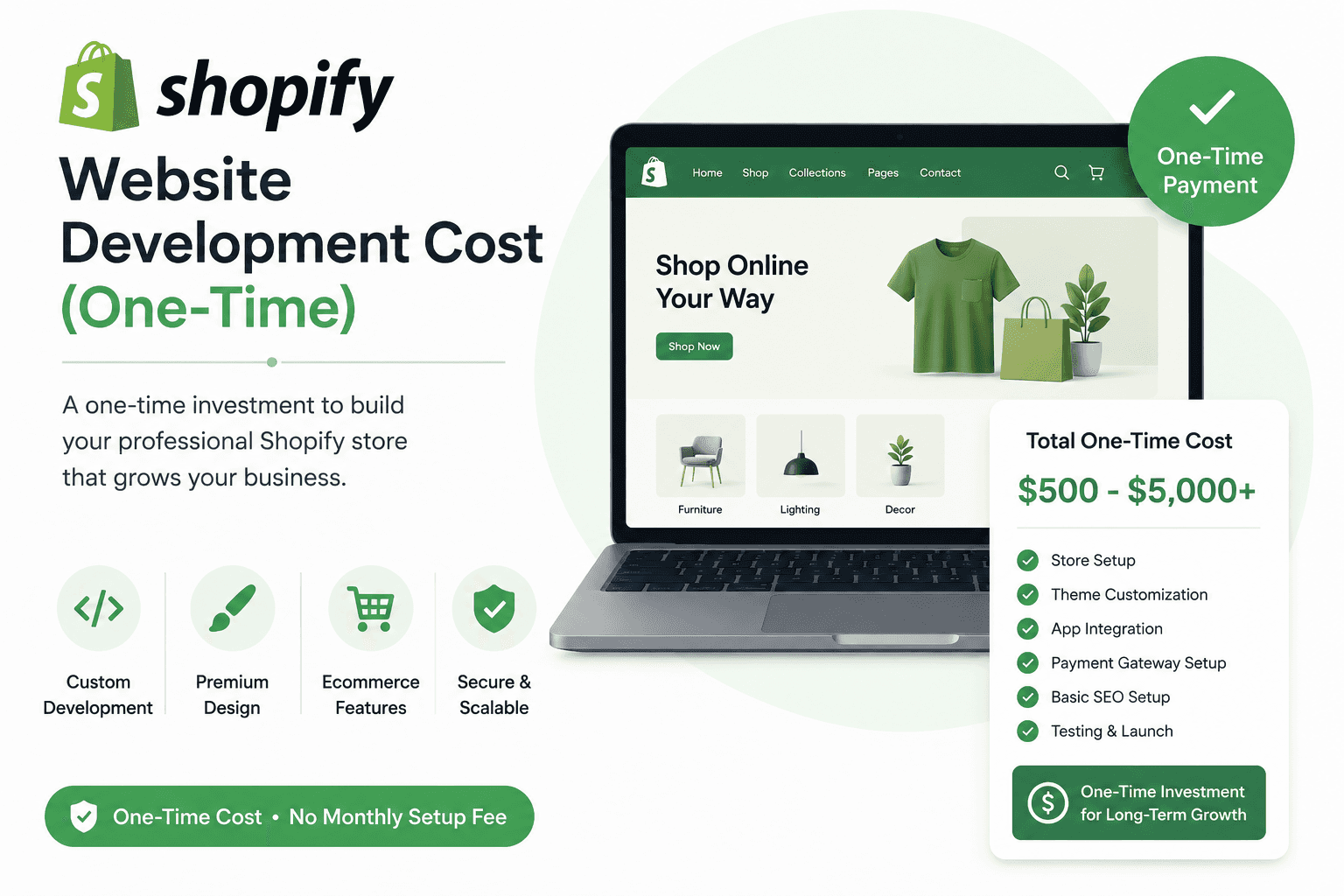
Scope | USD | INR |
|---|---|---|
DIY with free theme | $0 – $180 | ₹0 – ₹15,000 |
Premium theme + setup | $300 – $800 | ₹25,000 – ₹66,000 |
Freelancer custom build | $1,500 – $5,000 | ₹1,25,000 – ₹4,15,000 |
Agency Shopify development | $4,000 – $25,000 | ₹3,30,000 – ₹20,75,000 |
Shopify Plus full implementation | $15,000 – $80,000 | ₹12,50,000 – ₹66,50,000 |
Transaction fees on Shopify range from 0.5% to 2% unless you use Shopify Payments — a hidden cost many beginners overlook.
Working with a professional Shopify development company ensures your store is optimized for speed, conversion, and long-term scalability.
WooCommerce Website Pricing
WooCommerce is the world's most widely used ecommerce plugin, powering over 28% of all online stores. It runs on WordPress and is open-source — meaning the core is free. But "free" doesn't mean "no cost."
WooCommerce Core vs. Real Cost
Cost Component | USD | INR |
|---|---|---|
WooCommerce Plugin | Free | Free |
WordPress Hosting (annual) | $120 – $600 | ₹10,000 – ₹50,000 |
Premium Theme | $40 – $200 | ₹3,300 – ₹16,500 |
Essential Plugins (annual) | $200 – $800 | ₹16,500 – ₹66,000 |
SSL Certificate | $0 – $100/year | ₹0 – ₹8,300/year |
Developer Setup Fee | $500 – $8,000 | ₹41,500 – ₹6,65,000 |
Full WooCommerce Store Development Cost
Store Level | USD | INR |
|---|---|---|
Beginner DIY | $300 – $700 | ₹25,000 – ₹58,000 |
Small Business | $2,000 – $6,000 | ₹1,65,000 – ₹5,00,000 |
Advanced Custom | $8,000 – $20,000 | ₹6,65,000 – ₹16,60,000 |
WooCommerce shines for content-rich stores that need deep blog integration, custom checkout flows, or tight control over SEO.
Magento Ecommerce Development Cost
Magento (now Adobe Commerce) is the platform of choice for large-scale, feature-heavy ecommerce operations. It's powerful, flexible — and expensive.
Magento Licensing Costs
Edition | Annual Cost (USD) | Annual Cost (INR) |
|---|---|---|
Magento Open Source | Free | Free |
Adobe Commerce (Cloud) | $22,000 – $125,000/year | ₹1.83 Cr – ₹10.4 Cr/year |
Magento Development Cost Breakdown
Component | USD | INR |
|---|---|---|
Theme & UI Design | $5,000 – $20,000 | ₹4,15,000 – ₹16,60,000 |
Custom Module Development | $3,000 – $30,000 | ₹2,50,000 – ₹25,00,000 |
Third-Party Integrations | $2,000 – $15,000 | ₹1,65,000 – ₹12,50,000 |
Performance Optimization | $2,000 – $8,000 | ₹1,65,000 – ₹6,65,000 |
Total Development | $15,000 – $100,000+ | ₹12,50,000 – ₹83,00,000+ |
Magento is ideal for businesses with complex catalogs, multiple storefronts, or highly specific B2B requirements.
Custom Ecommerce Website Pricing
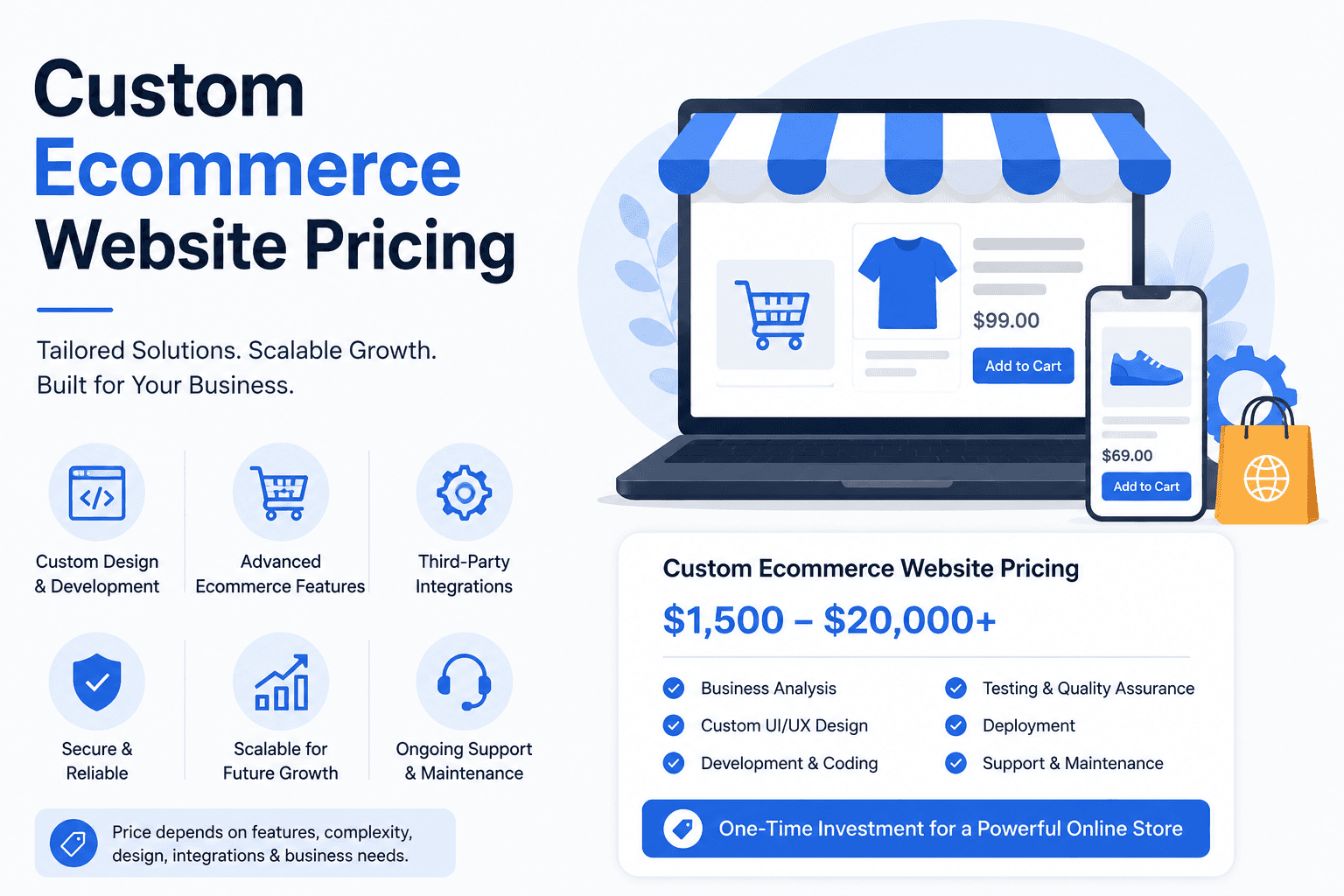
A fully custom ecommerce website is built from scratch — no templates, no platform limitations, just precisely what your business needs. This is the most expensive option but also the most powerful.
When to Choose Custom Ecommerce Development:
Unique business logic not supported by off-the-shelf platforms
Hyper-personalized user experience
Proprietary AI or ML integration
Complex B2B workflows
Very high traffic handling requirements (millions of monthly visitors)
Custom Ecommerce Website Cost
Complexity | USD | INR |
|---|---|---|
Basic Custom (React + Node/PHP) | $8,000 – $20,000 | ₹6,65,000 – ₹16,60,000 |
Mid-Level Custom | $25,000 – $75,000 | ₹20,75,000 – ₹62,25,000 |
Full Enterprise Custom | $80,000 – $500,000+ | ₹66,50,000 – ₹4.15 Crore+ |
Professional ecommerce website development services from an experienced agency typically yield better ROI on custom builds than working with individual freelancers.
Multi-Vendor Marketplace Development Cost
Building the next Amazon, Flipkart, or Etsy? Multi-vendor marketplace development is a specialized and complex undertaking.
Core Marketplace Features:
Vendor onboarding and profile management
Commission and payout management
Product approval workflows
Buyer-seller messaging system
Dispute and review management
Advanced analytics for admin and vendors
Multiple payment gateway support
Marketplace Development Cost
Approach | USD | INR |
|---|---|---|
SaaS Platform (Sharetribe, CS-Cart) | $500 – $3,000/year | ₹41,500 – ₹2,49,000/year |
WooCommerce + Dokan/WCFM | $3,000 – $10,000 | ₹2,49,000 – ₹8,30,000 |
Custom Marketplace Build | $30,000 – $200,000+ | ₹24,90,000 – ₹1.66 Crore+ |
AI-Powered Ecommerce Website Development Cost
2026 is the year AI goes from "nice to have" to "table stakes" in ecommerce. AI-powered ecommerce development includes machine learning-driven personalization, predictive inventory, conversational shopping assistants, and dynamic pricing engines.
AI Features & Their Costs
AI Feature | USD | INR |
|---|---|---|
AI Product Recommendation Engine | $3,000 – $15,000 | ₹2,49,000 – ₹12,45,000 |
AI Chatbot / Shopping Assistant | $2,000 – $12,000 | ₹1,66,000 – ₹9,96,000 |
Personalized Storefront | $5,000 – $20,000 | ₹4,15,000 – ₹16,60,000 |
Dynamic Pricing Engine | $8,000 – $30,000 | ₹6,65,000 – ₹24,90,000 |
AI-Powered Search | $4,000 – $18,000 | ₹3,32,000 – ₹14,94,000 |
Visual Search / AR Try-On | $10,000 – $50,000 | ₹8,30,000 – ₹41,50,000 |
AI-powered web development is no longer limited to tech giants. With the rise of AI APIs and pre-trained models, even mid-sized businesses can now integrate intelligent features at reasonable costs.
Ecommerce Mobile App Cost
With over 72% of ecommerce transactions happening on mobile in 2026, a dedicated mobile app is increasingly essential — not optional.
Mobile App Types
App Type | USD | INR |
|---|---|---|
Basic Android or iOS App | $5,000 – $15,000 | ₹4,15,000 – ₹12,45,000 |
Cross-Platform (Flutter/React Native) | $8,000 – $25,000 | ₹6,65,000 – ₹20,75,000 |
Native Android + iOS (Separate) | $20,000 – $60,000 | ₹16,60,000 – ₹49,80,000 |
Advanced App with AI Features | $30,000 – $100,000+ | ₹24,90,000 – ₹83,00,000+ |
Annual app maintenance (updates, bug fixes, OS compatibility) adds $2,000–$10,000/year (₹1,66,000–₹8,30,000/year).
Investing in mobile app development services alongside your website dramatically increases customer retention and average order value.
Ecommerce Website Maintenance Cost
Launching your store is just the beginning. Ongoing maintenance is a non-negotiable operational expense.
Monthly Maintenance Activities:
Plugin and platform updates
Security patches and monitoring
Performance optimization
Content updates (new products, banners)
Bug fixes and QA testing
Backup management
Analytics reporting
Ecommerce Maintenance Pricing
Service Level | USD/Month | INR/Month |
|---|---|---|
Basic (Self-managed) | $50 – $150 | ₹4,150 – ₹12,450 |
Standard (Agency retainer) | $200 – $600 | ₹16,600 – ₹49,800 |
Advanced (Full management) | $600 – $2,000 | ₹49,800 – ₹1,66,000 |
Enterprise (Dedicated team) | $3,000 – $10,000+ | ₹2,49,000 – ₹8,30,000+ |
Hidden Costs of Ecommerce Websites
This is the section most agencies don't tell you about upfront. Be aware of these often-overlooked expenses:
1. Transaction Fees: Shopify charges 0.5%–2% on every sale unless you use Shopify Payments. On $10,000/month revenue, that's up to $200 lost per month.
2. Premium Plugin/App Costs: The Shopify and WooCommerce app stores are full of essential tools priced at $10–$300/month each. Loyalty programs, advanced analytics, upsell tools, and review apps add up fast.
3. Payment Gateway Fees: Stripe, Razorpay, and PayPal charge 1.75%–2.9% + fixed fee per transaction.
4. CDN & Performance Tools: Cloudflare Pro, image optimization services, and speed tools cost $20–$200/month.
5. Email Marketing Platforms: Klaviyo, Mailchimp, or Omnisend can cost $50–$500/month depending on your subscriber count.
6. Customer Support Tools: Zendesk, Freshdesk, or Gorgias for ecommerce support runs $50–$300/month.
7. Return & Refund Management: Software for handling returns adds another layer of cost.
8. SSL Renewal: Often forgotten, SSL certificates need annual renewal.
9. Domain Renewal: Annual domain cost ($10–$50/year) is trivial but easy to miss.
10. Tax Compliance Software: TaxJar or Avalara for automated tax calculation: $20–$200/month.
Cost Based on Industry Type
Different industries have different ecommerce development requirements — and pricing reflects that.
Industry | Estimated Cost Range (USD) | Estimated Cost Range (INR) |
|---|---|---|
Fashion & Apparel | $5,000 – $40,000 | ₹4.15L – ₹33.2L |
Electronics & Gadgets | $8,000 – $60,000 | ₹6.65L – ₹49.8L |
Grocery & FMCG | $10,000 – $50,000 | ₹8.3L – ₹41.5L |
Furniture & Home Décor | $8,000 – $45,000 | ₹6.65L – ₹37.35L |
Jewellery | $5,000 – $30,000 | ₹4.15L – ₹24.9L |
Health & Pharmacy | $10,000 – $70,000 | ₹8.3L – ₹58.1L |
Books & Education | $3,000 – $20,000 | ₹2.49L – ₹16.6L |
Sports & Fitness | $5,000 – $35,000 | ₹4.15L – ₹29.05L |
Food Delivery | $15,000 – $80,000 | ₹12.45L – ₹66.4L |
B2B Industrial Goods | $20,000 – $150,000 | ₹16.6L – ₹1.245Cr |
Ecommerce Website Features & Their Pricing
Understanding how individual features contribute to your total ecommerce website cost helps you prioritize your budget.
Feature | USD | INR |
|---|---|---|
Product Catalog (up to 100 products) | Included | Included |
Advanced Filtering & Search | $500 – $3,000 | ₹41,500 – ₹2,49,000 |
Wishlist & Compare | $300 – $1,500 | ₹24,900 – ₹1,24,500 |
Product Reviews & Ratings | $300 – $2,000 | ₹24,900 – ₹1,66,000 |
Abandoned Cart Recovery | $500 – $3,000 | ₹41,500 – ₹2,49,000 |
Live Chat Integration | $200 – $1,000 | ₹16,600 – ₹83,000 |
Loyalty / Points System | $1,000 – $5,000 | ₹83,000 – ₹4,15,000 |
Subscription Module | $2,000 – $8,000 | ₹1,66,000 – ₹6,65,000 |
Multi-Language Support | $1,000 – $5,000 | ₹83,000 – ₹4,15,000 |
Multi-Currency Support | $1,000 – $4,000 | ₹83,000 – ₹3,32,000 |
Custom Checkout Flow | $1,500 – $6,000 | ₹1,24,500 – ₹4,98,000 |
AR Try-On Feature | $10,000 – $50,000 | ₹8,30,000 – ₹41,50,000 |
Payment Gateway Charges
Every online transaction goes through a payment gateway — and every gateway takes a cut.
Gateway | Transaction Fee | Monthly Fee | India Support |
|---|---|---|---|
Razorpay | 2% per transaction | None | Yes |
PayU | 1.75%–2.5% | None | Yes |
Stripe | 2.9% + $0.30 | None | Limited |
PayPal | 2.9% + $0.30 | None | Yes |
Cashfree | 1.75% | None | Yes |
CCAvenue | 2% | ₹1,200/year | Yes |
Shopify Payments | 0% (with Shopify plan) | Included | Limited |
For high-volume stores, even a 0.25% difference in gateway fees can translate to lakhs of rupees annually.
Hosting & Server Pricing
Your hosting infrastructure directly impacts your store's speed, uptime, and user experience — all critical for SEO and sales.
Hosting Type | USD/Month | INR/Month | Best For |
|---|---|---|---|
Shared Hosting | $3 – $10 | ₹249 – ₹830 | Starter DIY sites |
Managed WordPress Hosting | $25 – $60 | ₹2,075 – ₹4,980 | WooCommerce stores |
VPS Hosting | $20 – $100 | ₹1,660 – ₹8,300 | Growing stores |
Dedicated Server | $100 – $500 | ₹8,300 – ₹41,500 | High-traffic stores |
Cloud Hosting (AWS/GCP/Azure) | $50 – $2,000+ | ₹4,150 – ₹1,66,000+ | Scalable enterprise |
Shopify Hosting (Included) | Included in plan | Included in plan | Shopify stores |
SEO Cost for Ecommerce Websites
An online store without SEO is like a physical store with no signage. Ecommerce SEO drives organic traffic — the highest-quality, lowest long-term cost customer acquisition channel available.
Ecommerce SEO Services Pricing
SEO Package | USD/Month | INR/Month | Scope |
|---|---|---|---|
Starter SEO | $300 – $600 | ₹24,900 – ₹49,800 | On-page basics, GMB setup |
Growth SEO | $600 – $1,500 | ₹49,800 – ₹1,24,500 | On-page + link building + content |
Advanced Ecommerce SEO | $1,500 – $4,000 | ₹1,24,500 – ₹3,32,000 | Technical + authority building |
Enterprise SEO | $4,000 – $15,000+ | ₹3,32,000 – ₹12,45,000+ | Full SEO team, international |
Hiring professional ecommerce SEO services early in your store's lifecycle gives you a compounding advantage that paid ads simply cannot replicate.
Ecommerce Marketing Budget
SEO is long-term. For immediate traffic, you'll need paid marketing.
Marketing Channel | USD/Month (Budget) | INR/Month (Budget) |
|---|---|---|
Google Shopping Ads | $500 – $5,000+ | ₹41,500 – ₹4,15,000+ |
Meta (Facebook/Instagram) Ads | $300 – $3,000+ | ₹24,900 – ₹2,49,000+ |
Email Marketing | $50 – $500 | ₹4,150 – ₹41,500 |
Influencer Marketing | $200 – $5,000+ | ₹16,600 – ₹4,15,000+ |
Content Marketing | $300 – $2,000 | ₹24,900 – ₹1,66,000 |
SMS Marketing | $50 – $300 | ₹4,150 – ₹24,900 |
Most successful ecommerce brands in India allocate 10–20% of monthly revenue to marketing once they reach stability.
Cost Comparison Table
Platform / Store Type | Development Cost (USD) | Development Cost (INR) | Monthly Operations |
|---|---|---|---|
DIY Shopify Basic | $0 – $800 | ₹0 – ₹66,000 | $50 – $150 |
WooCommerce Starter | $300 – $1,500 | ₹25,000 – ₹1,25,000 | $30 – $100 |
Small Business (Agency) | $3,000 – $8,000 | ₹2.5L – ₹6.65L | $150 – $400 |
Medium Scale (Shopify/Woo) | $8,000 – $25,000 | ₹6.65L – ₹20.75L | $300 – $800 |
Magento Medium | $15,000 – $40,000 | ₹12.45L – ₹33.2L | $500 – $1,500 |
Custom Ecommerce | $25,000 – $100,000 | ₹20.75L – ₹83L | $800 – $3,000 |
AI-Powered Store | $30,000 – $150,000 | ₹24.9L – ₹1.245Cr | $1,000 – $5,000 |
Enterprise Magento/Custom | $80,000 – $500,000+ | ₹66.5L – ₹4Cr+ | $3,000 – $15,000+ |
Beginner vs Advanced Ecommerce Store Comparison
Factor | Beginner Store | Advanced Store |
|---|---|---|
Development Cost | $300 – $3,000 | $30,000 – $500,000+ |
Products | Up to 100 | 1,000 – 100,000+ |
Payment Gateways | 1–2 | 5+ |
AI Features | None | Recommendation, chatbot, dynamic pricing |
Mobile App | No | Yes |
Multilingual | No | Yes |
Custom Integrations | Minimal | ERP, CRM, WMS, etc. |
SEO Optimization | Basic | Advanced + Technical |
Load Handling | <1,000 visitors/day | 100,000+ visitors/day |
Team Required | 1 person | Dedicated team |
Time to Launch | 1–4 weeks | 3–12 months |
How to Reduce Ecommerce Development Cost
You don't need to compromise quality to stay within budget. Here are proven strategies:
1. Start with MVP (Minimum Viable Product): Launch with core features only. Add advanced functionality as revenue grows.
2. Use a proven platform: Shopify or WooCommerce dramatically reduce development time compared to custom builds.
3. Choose a cross-platform approach for mobile: Flutter or React Native cost 40–50% less than building separate native apps.
4. Use existing plugins/extensions: Don't pay to rebuild what already exists for $50–$200.
5. Hire a specialist agency in India: Indian ecommerce development agencies offer world-class quality at 50–70% lower cost than US or UK agencies.
6. Standardize your design: Custom, unique UI adds cost. Premium themes with customization are 60–80% cheaper.
7. Phase your integrations: Don't integrate every third-party tool at launch. Phase them in as needed.
8. Prioritize revenue-generating features: Focus budget on checkout optimization, product discovery, and mobile performance.
Latest Ecommerce Trends in 2026
The ecommerce landscape has shifted dramatically. Here's what's defining competitive stores in 2026:
🤖 AI Personalization
Real-time personalized shopping experiences based on behavior, purchase history, and preferences. Stores using AI personalization report 15–30% higher conversion rates.
🎙️ Voice Commerce
Over 40% of mobile users in India now use voice search. Stores optimized for conversational queries and voice checkout are capturing this growing audience.
🕶️ Augmented Reality Shopping
AR try-on features for fashion, furniture, and cosmetics are no longer luxury features — they're expected by Gen Z shoppers.
🧠 Headless Commerce
Decoupling the frontend from the backend enables lightning-fast experiences, PWA support, and seamless omnichannel selling.
📱 Mobile-First, App-First
Mobile apps with push notifications, personalized feeds, and one-click checkout deliver 3x higher conversion than mobile websites alone.
🤝 Social Commerce
TikTok Shop, Instagram Shopping, and WhatsApp Commerce are driving significant GMV for D2C brands in 2026.
⚡ Real-Time Inventory & Logistics AI
Predictive inventory management reduces stockouts and overstock situations, directly improving margins.
🌍 Cross-Border Commerce
With simplified global payment rails and localized experiences, D2C brands are going international from day one.
Why Businesses Are Investing in AI Ecommerce Stores
AI isn't a future investment anymore — it's a 2026 business imperative. Here's why smart businesses are prioritizing AI-powered ecommerce:
Increased Conversion: AI-powered product recommendations can increase average order value by 20–35%.
Reduced Cart Abandonment: AI chatbots engage hesitating shoppers at the right moment, recovering 10–25% of abandoned carts.
Inventory Intelligence: Predictive AI reduces wastage and ensures top-selling items are always in stock.
Customer Retention: Personalized email and SMS journeys powered by AI increase repeat purchase rates significantly.
Competitive Moat: Stores with AI capabilities are harder to compete with on price alone — they win on experience.
24/7 Customer Support: AI shopping assistants handle thousands of concurrent queries with zero wait time.
The ROI on AI ecommerce features typically becomes positive within 6–12 months of deployment.
How to Choose the Right Ecommerce Development Company
Your development partner is arguably more important than the platform you choose. Here's how to evaluate them:
Key Evaluation Criteria:
1. Portfolio & Case Studies: Look for relevant industry experience and measurable client results.
2. Technical Stack Expertise: Confirm they're specialists in your chosen platform (Shopify, WooCommerce, custom, etc.).
3. Design Capabilities: A technically sound but poorly designed store will convert poorly. Check their UI/UX work.
4. Post-Launch Support: Ensure they offer maintenance, updates, and ongoing support — not just delivery.
5. SEO & Performance Awareness: Many developers build beautiful stores that load slowly and rank nowhere. Insist on Core Web Vitals compliance.
6. Communication & Transparency: Regular updates, clear timelines, and honest pricing — non-negotiables.
7. Reviews & References: Check Google reviews, Clutch.co ratings, and ask for references from past clients.
8. Pricing Clarity: Avoid agencies with vague pricing. A good ecommerce website development services company provides detailed project scopes and quotes.
FAQs
1. How much does it cost to build an online shopping website in India?
The cost of an online shopping website in India ranges from ₹25,000 for a basic DIY setup to ₹50 lakh or more for a fully custom enterprise store. The most common range for small to medium business stores is ₹1,50,000 to ₹8,00,000.
2. What is the cheapest way to create an ecommerce website?
The cheapest approach is a DIY Shopify Basic or WooCommerce setup, which can cost as little as ₹25,000–₹60,000 including hosting, domain, and a premium theme.
3. How much does a Shopify store cost per month in India?
Shopify plans range from ₹415/month (Starter) to ₹24,800/month (Advanced) for monthly subscription fees. Plus development, apps, and optional transaction fees.
4. Is WooCommerce cheaper than Shopify?
The core WooCommerce plugin is free, but total costs (hosting, plugins, developer fees) are often comparable to Shopify. WooCommerce offers more flexibility; Shopify offers more convenience.
5. How much does ecommerce website maintenance cost?
Monthly maintenance costs range from ₹4,150 (basic self-managed) to ₹1,66,000+ per month for full-service agency maintenance, depending on store complexity.
6. How long does it take to build an ecommerce website?
A basic store takes 1–3 weeks. A medium-scale custom store takes 6–12 weeks. Enterprise ecommerce projects can take 4–12 months.
7. What is the cost of building a multi-vendor marketplace like Amazon?
A custom multi-vendor marketplace typically costs $30,000–$200,000+ (₹25 lakh – ₹1.66 crore), depending on feature complexity.
8. Do I need a mobile app along with my website?
Not necessarily at the start. However, as your store scales, a mobile app significantly improves retention and average order value. Budget for it in Phase 2.
9. What are the hidden costs of ecommerce websites?
Transaction fees, premium plugin subscriptions, payment gateway charges, CDN services, email marketing tools, return management software, and tax compliance tools are the most common hidden expenses.
10. How much does AI integration cost in an ecommerce website?
AI features range from $2,000 for a basic chatbot to $50,000+ for full personalization engines and AR features. Most mid-sized stores invest $5,000–$20,000 in AI capabilities.
11. What is the ROI of an ecommerce website?
Well-built ecommerce websites typically achieve break-even within 6–18 months. Stores with strong SEO and email marketing can generate 3–10x ROI within 2–3 years.
12. How much does ecommerce SEO cost?
Ecommerce SEO services range from ₹24,900/month for starter packages to ₹12,45,000+/month for enterprise campaigns. Growth-stage businesses typically spend ₹50,000–₹1,50,000/month.
13. Should I choose Shopify or WooCommerce for my online store?
Choose Shopify if you want an all-in-one hosted solution with less technical management. Choose WooCommerce if you need deep content integration, full ownership, or highly customized checkout flows.
14. Can I start an online store with a limited budget of ₹50,000?
Yes. With ₹50,000 you can launch a functional Shopify or WooCommerce store with 50–100 products, a professional theme, and one payment gateway. Focus on one niche and grow from there.
15. Is Magento good for small businesses?
Magento Open Source can work for ambitious small businesses, but its complexity and maintenance costs make it better suited for medium-to-large operations with dedicated technical resources.
16. How do I estimate my ecommerce website development cost accurately?
List your required features, choose a platform, and get detailed quotes from 2–3 agencies. Always add 15–20% buffer for unexpected requirements. Working with an experienced ecommerce website development services partner helps avoid costly scope creep.
17. What is headless commerce and is it worth the extra cost?
Headless commerce decouples your frontend from the backend, enabling faster pages, more flexibility, and true omnichannel presence. It's worth the extra cost ($20,000–$100,000) for stores with 50,000+ monthly visitors and multiple selling channels.
Conclusion
Building a successful online store in 2026 is one of the best investments a business can make — but only if you approach it with clear eyes on the true costs involved.
Whether you're a first-time entrepreneur launching a beginner store on ₹50,000 or an established brand planning a ₹50-lakh custom AI-powered platform, the key is to match your investment to your growth stage while building with scalability in mind.
Here's what to remember:
Start lean. Don't overbuild for Day 1. Launch with a solid MVP and add features as revenue grows.
Don't ignore hidden costs. Budget for maintenance, plugins, marketing, and SEO from the start.
Choose the right platform. Your platform choice has a 3–5 year impact on your business.
Invest in SEO early. Organic traffic compounds. Paid ads are expensive forever.
AI is now mainstream. Even a $3,000 investment in AI features can return 5–10x in conversion improvements.
Partner with experts. The difference between a store that struggles and one that succeeds often comes down to the development team and strategy behind it.
Ready to build your online store? Whether you're planning a beginner ecommerce website or a sophisticated enterprise platform, working with the right AI ecommerce website development services Companies partner makes all the difference.
→ Contact our team today for a free ecommerce consultation and detailed project quote.