Latest Lead Generation Techniques in 2027 : Proven Methods to Attract Qualified Leads
Posted on
Product Design
Posted at

Lead generation has changed more in the last three years than it did in the previous ten. AI search summaries now answer questions before a user ever clicks a link. Ad costs keep climbing as more businesses compete for the same eyeballs. Privacy rules have made it harder to track and retarget people the way marketers could in 2020. And yet, businesses that understand the fundamentals — and adapt them to today's tools — are generating more qualified leads than ever, often without paying a marketing agency a single rupee or dollar in retainer fees.
This guide walks through a complete, practical system for How to generating leads in 2027: from setting the right goals, to ranking on search engines and AI answer engines, to running ads that convert, to closing deals through direct messaging. Whether you're a small business owner, coach, consultant, or agency owner tired of guessing what "the algorithm wants," this is the playbook.
Table of Contents
Why Lead Generation Looks Different in 2027
Step One: Set Clear, Measurable Goals
Step Two: Know Exactly Who You're Targeting
SEO in the Age of AI Search
Building a Website That Converts (Without Hiring a Developer)
Organic Social Media Lead Generation (SMO)
Paid Social Advertising: Meta, Instagram, and Beyond
PPC and Local Search Ads That Actually Pay Off
Local SEO: Owning Your Neighborhood
Google Business Profile: Your Free 24/7 Salesperson
WhatsApp and Direct Messaging Marketing
Influencer Marketing and User-Generated Content
The 2027 Marketing Tool Stack
Analytics, ROI, and Tracking What Matters
Common Mistakes That Kill Lead Generation
Putting It All Together: A 90-Day Action Plan
1. Why Lead Generation Looks Different in 2027
Three shifts define lead generation right now.
First, search itself has changed. AI-generated answer summaries now sit above traditional search results for a large share of queries, meaning people often get an answer without visiting any website at all. Businesses that used to rely on ranking in the top three blue links now have to think about how their content gets referenced inside AI-generated answers — which rewards clear, well-structured, genuinely useful content over keyword-stuffed pages.
Second, paid acquisition has gotten more expensive and more competitive. Cost-per-click on major platforms has trended upward for several years running, and privacy changes have made precise retargeting harder. That means the businesses winning today are the ones building owned channels — email lists, WhatsApp contact lists, communities — rather than depending entirely on rented ad space.
Third, trust matters more than ever. With AI-generated content flooding every platform, consumers have become more skeptical, and more likely to trust real reviews, real testimonials, and real human interaction. A short, personal WhatsApp message from a real person can now outperform a slick paid ad in categories like local services, coaching, and consulting.
None of this means the fundamentals are dead. It means the fundamentals — clear goals, a defined audience, useful content, and consistent follow-up — matter more than ever, layered on top of smarter tools.
2. Step One: Set Clear, Measurable Goals
Before touching a single marketing channel, get specific about what you're trying to achieve. "More leads" is not a goal — it's a wish.
Short-term goal (next 30 days). Pick one number you can track. Examples:
Get 1,000 visitors to your website
Collect 100 qualified leads for your service
Sell 100 units through your online store
Long-term goal (next 6 months). This should connect directly to revenue, not just traffic. Examples:
Grow monthly recurring revenue by 25%
Build an email/WhatsApp list of 5,000 warm contacts
Reduce cost-per-lead by 30% through owned channels
Write these down somewhere you'll actually look at — a notebook, a Google Sheet, a project board. Vague goals produce vague marketing. Specific, numeric goals let you tell within weeks whether a channel is working or wasting your money.
3. Step Two: Know Exactly Who You're Targeting
Every dollar spent on marketing to the wrong audience is a dollar wasted. Before you write a single ad or blog post, answer these questions in detail:
Age range — Are you speaking to 18–25 year-olds, 25–40, or 40+? The tone, platform, and offer should all shift based on this.
Location — Are you targeting a specific neighborhood, city, country, or are you global? Local businesses should be hyper-specific here.
Gender split — Is your audience mostly one gender, or evenly mixed? This affects imagery, language, and platform choice.
Where they spend time online — Instagram and TikTok skew younger and visual; LinkedIn skews professional and B2B; Facebook groups still dominate for local community and older demographics; WhatsApp is universal for direct communication, especially in South Asia, the Middle East, and Latin America.
Their core pain point — What problem keeps them up at night that your product or service solves? This single answer should shape every headline you write.
A simple exercise: write one paragraph describing your ideal customer as if you were describing a real person you know — their daily frustrations, what they've already tried, and why those attempts failed. That paragraph becomes the foundation for your website copy, ad copy, and content strategy.
4. SEO in the Age of AI Search
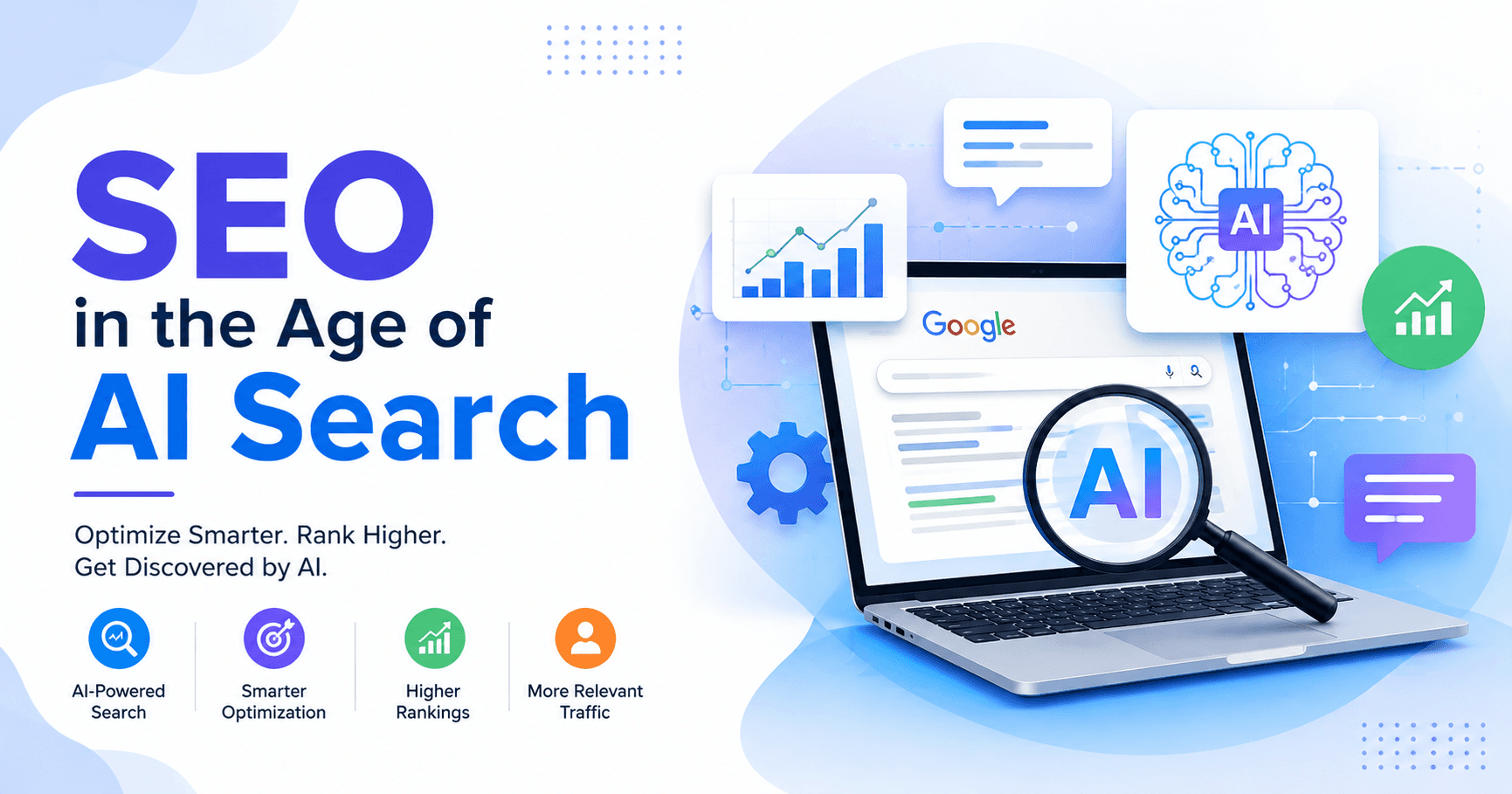
Search engine optimization isn't dead — it's evolved. In 2027, ranking well means satisfying two audiences at once: traditional search crawlers and the AI systems that generate summarized answers.
Keyword Research, Updated
Start with tools like Google Keyword Planner, Ubersuggest, or SEMrush to find what people are actually typing. But go further than single keywords — focus on the full questions people ask, since AI search summaries are built around question-and-answer patterns. "Best digital marketing tips for beginners" still matters, but so does "how do I generate leads without an agency in 2027," because that phrasing mirrors how people now talk to search engines and AI assistants alike.
Look for long-tail keywords with moderate competition and genuine search intent behind them, rather than chasing high-volume terms that are impossible to rank for as a small business.
On-Page Optimization That Still Works
Title tags: Lead with your target keyword, keep it natural and readable — not stuffed.
Meta descriptions: Write these as if they're an ad; include your keyword but focus on why someone should click.
Headings (H1, H2, H3): Structure your content the way you'd structure an answer to a question. AI summarization tools favor clearly labeled sections over dense, unbroken paragraphs.
Content quality over density: Old-school keyword density targets (1–2%) matter less than genuinely answering the question a visitor came with. Write for a person first, and let keywords appear naturally.
Alt text on images: Describe the image accurately and include relevant keywords where they fit naturally — this also helps accessibility.
Technical Basics You Cannot Skip
Site speed: Compress images, use caching, and keep load times under three seconds. Slow sites lose both rankings and visitors.
Mobile-first design: The majority of local searches happen on mobile. Test your site with Google's Mobile-Friendly Test and fix any issues immediately.
Google Analytics and Search Console: Install both. Analytics tells you who's visiting and what they do once they arrive; Search Console tells you what's ranking, what's broken, and what's being indexed.
Sitemap submission and internal linking: Submit your sitemap in Search Console and link your own pages together so search engines (and AI crawlers) can discover your full site, not just your homepage.
Backlinks Still Matter
Backlinks remain one of the strongest trust signals for both traditional search and AI-based answer engines. A few reliable, low-cost ways to earn them:
List your business on established local directories relevant to your country (for example, Bark.com, Thumbtack, or IndiaMART in India, or Yelp, Yell and industry-specific directories elsewhere).
Guest post on niche blogs or local publications in exchange for a backlink.
Publish press releases on reputable PR distribution sites when you have real news — a launch, an award, a milestone.
Share your content consistently in relevant, active Facebook, LinkedIn, and WhatsApp groups where your audience actually spends time — this drives both direct traffic and natural backlinks over time.
5. Building a Website That Converts (Without Hiring a Developer)
You do not need to spend thousands on a developer to get a professional, lead-generating website live this week. Website builders like Wix, Squarespace, and Framer or Webflow have matured to the point where a well-organized business owner can build a clean, mobile-responsive site in a single afternoon.
A Simple Build Process
Choose a builder and sign up using your email or a Google/Facebook account.
Pick a starting method. Most builders now offer an AI-assisted setup: answer a few questions about your business type, name, and services, and the platform generates a starting template for you to customize.
Select a template that matches your industry and edit it — don't start from a blank page unless you have design experience.
Customize your core pages: Home, About, Services, Contact, and (if relevant) Testimonials or Pricing. Keep copy short, benefit-focused, and scannable.
Add your contact details prominently — phone number, WhatsApp link, email, and physical address if applicable, on every page, not just the Contact page.
Set up a free subdomain to start, then upgrade to a custom domain (yourbusiness.com) once you're ready to invest — a custom domain builds significantly more trust with visitors.
Publish and share the link everywhere: social bios, email signatures, business cards, Google Business Profile.
Conversion Essentials
A pretty website that doesn't generate leads is a wasted afternoon. Make sure every page includes:
A clear call-to-action (CTA): "Book a Free Consultation," "Get a Quote," "Start Your Free Trial" — not a vague "Learn More."
A lead capture form above the fold, not buried at the bottom of the page.
Social proof: testimonials, review scores, client logos, or case studies close to your CTA.
A live chat or WhatsApp widget so visitors can ask a question instantly instead of leaving to search elsewhere.
Fast-loading, high-quality images — most builders include free stock image libraries, so there's no excuse for blurry or irrelevant visuals.
6. Organic Social Media Lead Generation (SMO)
Paid ads get attention, but organic social media outreach remains one of the highest ROI activities available — it costs time, not money, and it works especially well for local and service-based businesses.
Use LinkedIn's search bar to find posts containing phrases like "looking for [your service]" or "need [your service] recommendations."
Monitor relevant industry and local groups for people actively posting about needs you can solve.
Send a personalized connection request referencing their specific post — never a generic template.
Once connected, send a short, no-pressure direct message introducing what you do and how you can help with what they posted about.
Join local and niche-specific groups relevant to your service (for example, a city-based small business group, or a niche community group).
Check these groups daily for people asking for recommendations.
Comment helpfully first, then follow up with a direct message rather than hard-selling in the public comment thread.
Build relationships in the group over time — consistent, helpful presence outperforms one-off pitches.
X (formerly Twitter)
Search relevant keywords and monitor hashtags related to your industry and local area.
Reply genuinely to relevant posts before pitching anything.
Move the conversation to direct messages once there's a natural opening.
The Local Influencer Shortcut
One of the fastest ways to reach a warm, local audience is partnering with micro-influencers and local city-focused social accounts. Reach out directly, propose a simple deal (a free service, a flat fee, or a commission), and ask them to share your offer with their audience. Local Facebook and Instagram community pages — the kind that post "things happening in [city]" — already have your exact target audience gathered in one place; a single well-placed post there can outperform a week of cold outreach.
Rules That Never Go Out of Style
Speed matters. Respond to interested leads within minutes, not days — the first business to reply usually wins the deal.
Personalize everything. Generic copy-paste messages get ignored; referencing something specific gets replies.
Follow up. Most leads don't convert on the first message. A polite follow-up after a few days of silence recovers a meaningful share of "lost" leads.
7. Paid Social Advertising: Meta, Instagram, and Beyond
Organic reach will only take you so far. When you're ready to scale, paid social advertising — particularly through Meta's Ads Manager, which covers both Facebook and Instagram — remains one of the most controllable, targetable channels available.
Before You Launch Your First Ad
You'll need:
A Facebook Page for your business
An Instagram account connected to that Page (so your ad can run on both platforms from a single campaign)
A payment method added to Meta Ads Manager
Step-by-Step Setup
Open Ads Manager and click "Create" to start a new campaign.
Choose your objective. For lead generation specifically, a messaging-focused or lead-generation campaign objective tends to outperform simple traffic or awareness objectives, since it optimizes for people who actually want to talk to you.
Name your ad set clearly — something like "Leads – [City] – [Month]" so you can track performance over time.
Connect your messaging channels (Messenger, Instagram, and optionally WhatsApp) so interested users can reach you directly from the ad.
Set your performance goal to maximize conversations or leads, depending on the objective you chose.
Set a realistic daily budget. Small businesses can start meaningfully with a modest daily budget and scale up once you see which ads convert.
Define your audience by location, age range, gender, and — if you want more precision — interests and behaviors. Save this audience so you can reuse or refine it in future campaigns.
Build the ad itself: a clear, high-quality image or short video, a headline that speaks to the core pain point you identified earlier, and a specific call-to-action button.
Set up an automated message template with quick-reply buttons like "Tell me more," "Price?," or "Contact now" — this reduces friction and increases response rate.
Publish and monitor. Meta will review the ad before it goes live; once approved, track performance daily for the first week to catch problems early.
Getting More From Your Ad Spend
Test at least two to three creative variations per campaign — image style, headline, and CTA can each dramatically change performance.
Retarget people who engaged with your page, watched a video, or messaged you but didn't convert — these warm audiences typically convert at a much lower cost than cold audiences.
Refresh creative every few weeks; even good ads suffer "ad fatigue" once an audience has seen them repeatedly.
8. PPC and Local Search Ads That Actually Pay Off
Google Ads, when connected to a verified Google Business Profile, is one of the most direct ways to capture people actively searching for what you sell — high intent, ready-to-buy traffic.
What You Need Before Starting
A verified Google Business Profile
A Google Ads account
A payment method
Setup Walkthrough
Link your Google Business Profile to Google Ads under Tools → Linked Accounts, so your ads can display your location, call button, and map pin.
Create a new campaign and select a "Local" campaign type if your goal is store visits, calls, or local service inquiries.
Select your business location(s) from your linked profile.
Set your budget and goal — realistic daily budgets vary widely by industry and competition, so start conservatively and scale based on results.
Add creative assets: clear photos of your storefront or work, a strong headline focused on your core benefit, and buttons like "Call Now" or "Get Directions."
Target your local radius — a tight radius (5–10 km) often outperforms broad targeting for local service businesses, since it concentrates budget on people who can realistically become customers.
Review and publish. Google will review the campaign before it goes live.
Where These Ads Show Up
Local campaigns can appear across Google Search, Google Maps, and YouTube, giving you visibility at multiple points in a customer's search journey.
Tracking and Improving
Check your Google Ads dashboard weekly for clicks, calls, and direction requests. Pause underperforming ads, double down on what's working, and test new headlines regularly — PPC rewards continuous small optimizations far more than a "set it and forget it" approach.
9. Local SEO: Owning Your Neighborhood
For any business that serves a physical area — a clinic, a salon, a consultancy, a training institute — local SEO often delivers the highest return of any channel, because it captures people who are already looking for exactly what you offer, nearby, right now.
The Local SEO Checklist
Claim and complete free profiles on major local directories relevant to your country — platforms like Bark.com, Thumbtack, or IndiaMART in India, or Yelp, Yell and Google Business Profile in India, or Yelp and industry-specific directories in other markets.
Consider paid listing upgrades on high-traffic directories. Paid placements on platforms like Thumbtack often push your listing above competitors and can include direct lead packages.
Explore verified lead packages offered by some directories, where you pay for pre-qualified leads filtered by city, category, and budget.
Fully optimize every profile with real business photos, an accurate address, working contact details, and a steady stream of genuine customer reviews.
Why This Works
More visibility across trusted local platforms builds more trust, and more trust converts into more leads — a simple but reliable equation, especially for businesses competing in categories where customers instinctively compare multiple options before choosing.
10. Google Business Profile: Your Free 24/7 Salesperson
If you do only one thing from this guide, make it this. A fully optimized Google Business Profile (GBP) is free, and for most local businesses it drives more qualified leads than any paid channel.
Optimization Steps
Use a keyword-rich business name where appropriate and within Google's naming guidelines — for example, "Scholarheads – Digital Marketing Training in Ahmedabad" rather than just "Scholarheads."
Write a keyword-aware but natural description. Mention what you do and where, using the phrases real customers would search — "SEO training in Ahmedabad" or "Google Ads classes for beginners" — without sounding robotic.
Add high-quality, geo-tagged photos and short videos of your location, your team, your work, and — where relevant — customer testimonials.
Actively collect detailed reviews. Ask happy customers to mention specifics ("great SEO training in Ahmedabad") rather than a generic five stars — detailed reviews carry more SEO weight and more persuasive power for future customers.
Fill out every available field: business hours, website link, call button, WhatsApp or booking link, FAQs, and links to your social profiles.
Post updates weekly. New offers, upcoming events, or customer wins keep your profile active, which Google rewards with better visibility.
Respond to every review — positive or negative — and answer every question posted on your profile. This responsiveness is a visible trust signal to anyone browsing your listing.
The Payoff
A consistently maintained GBP shows up more often in local search results and Google Maps, builds credibility before a customer even visits your website, and — when combined with local Google Ads — creates a compounding effect where paid and organic visibility reinforce each other.
11. WhatsApp and Direct Messaging Marketing
In markets across South Asia, the Middle East, Africa, and Latin America, WhatsApp isn't a nice-to-have channel — it's often the primary way customers expect to communicate with a business. Used well, it's one of the highest-converting channels available, because it feels personal rather than promotional.
Building a Compliant, Effective System
Choose a proper WhatsApp Business API tool (not a workaround) that supports bulk messaging, multimedia content, auto-replies, scheduling, and delivery/click tracking. Always prioritize tools and data sources that comply with local messaging and privacy regulations — unsolicited bulk messaging to purchased lists carries real legal and reputational risk in most markets today, and platforms have gotten far more aggressive about banning numbers that violate their policies.
Build your list the right way — through opt-ins on your website, ads, in-store sign-ups, or QR codes — rather than through purchased contact lists, which increasingly result in blocked numbers and poor deliverability.
Keep your data clean, removing duplicates and inactive numbers regularly.
Write persuasive, respectful messages that briefly introduce your business, highlight a genuine benefit, and include supporting visuals like a flyer or short video.
Always include one clear CTA: "Reply YES for course details," "Click to book your free demo," "Visit our site for more info."
Automate your follow-up sequence. A simple two-to-three message sequence over several days recovers a meaningful percentage of leads who don't respond immediately.
Automate initial acknowledgment ("Thanks for your message — our team will reply shortly") so no lead feels ignored, even outside business hours.
Timing and Tone
Messages sent late morning (around 11 AM–1 PM) or early evening (4 PM–6 PM) tend to perform best, since they land during natural phone-checking windows without feeling intrusive. Keep every message short, professional, and personalized — and always send from a verified business account with your logo, since this materially increases trust and reply rates compared to an unverified personal number.
12. Influencer Marketing and User-Generated Content
Two channels have grown from "nice extras" into core lead generation strategies: influencer partnerships and user-generated content (UGC).
Influencer Marketing on a Small Budget
You don't need a celebrity endorsement. Two categories consistently deliver strong local ROI:
Micro-influencers with genuine local followings — often more trusted by their audience than larger, more commercial accounts, and far more affordable to work with.
City or neighborhood-focused social accounts ("things to do in [city]" pages) that already have your exact target audience gathered in one place.
Reach out with a specific, low-friction proposal: a free product or service in exchange for an honest post, or a small flat fee plus a trackable discount code so you can measure results directly.
UGC That Builds Trust Faster Than Ads
User-generated content — real customers sharing real experiences on video — has become one of the most trusted content formats, because audiences increasingly assume polished brand ads are exaggerated, while a real customer's unscripted reaction feels credible.
Practical ways to generate UGC:
Ask happy customers directly for a short video testimonial, and make it easy by sending three simple questions to answer on camera.
Offer a small incentive (a discount, a free add-on) for customers who tag your business in their own posts.
Repurpose your best UGC into ads — content that started as an organic post frequently outperforms professionally produced ad creative, because it doesn't look like an ad.
13. The 2027 Marketing Tool Stack
You don't need a large budget to run a professional operation. Here's a lean, effective stack:
Design — Canva. Create social posts, ad creatives, thumbnails, and carousel designs without any design background. Use brand kits to keep your visuals consistent, and explore Canva's built-in animation and background-removal tools for faster, more polished output.
Content and research — AI writing and research assistants (like Claude or similar tools) plus Perplexity-style research tools. Use these to draft blog posts, ad copy, and social captions faster, to brainstorm content ideas, and to research market trends and competitor positioning. Always review and personalize AI-generated drafts before publishing — the businesses that stand out add real expertise and a genuine voice on top of the AI draft, rather than publishing it unedited.
SEO and competitor analysis — SEMrush or similar platforms. Run keyword research, technical SEO audits, backlink tracking, and competitor analysis to see exactly what's working for others in your space.
WhatsApp automation — Wati.io or similar WhatsApp Business API providers. Set up automated campaigns, bulk messaging, auto-replies, and integrations with your CRM and Facebook Lead Ads so every channel feeds into one follow-up system.
Website analytics — Google Analytics paired with a lightweight tool like Statcounter. Track real-time visitor behavior — pages visited, time spent, entry and exit points — to understand exactly where your leads are coming from and where visitors drop off before converting.
CRM — even a simple spreadsheet or a free-tier CRM. The specific tool matters far less than having one place where every lead, conversation, and follow-up is tracked. Leads that fall through the cracks because there's no system are the single most common reason marketing "doesn't work."
14. Analytics, ROI, and Tracking What Matters
Marketing without measurement is just spending. Build a simple weekly habit of reviewing:
Cost per lead, broken down by channel, so you know which channels deserve more budget and which need to be cut or fixed.
Lead-to-customer conversion rate, since a channel that produces cheap but low-quality leads may cost you more in the end than a channel with a higher cost per lead but a much higher close rate.
Traffic sources, using Google Analytics, to see whether organic search, paid ads, social, or direct/WhatsApp traffic is driving the most valuable visitors.
On-site behavior, to spot where visitors drop off — a high-traffic page with a low conversion rate is usually a sign your CTA, offer, or page speed needs work, not that your traffic source is bad.
Response time and follow-up rate, since even the best-generated lead is wasted if nobody follows up within a reasonable window.
Set a simple monthly review: pull these numbers into one sheet, compare them against your original 30-day and 6-month goals from Step One, and adjust budget and effort toward whatever is actually converting — not whatever feels most exciting to work on.
15. Common Mistakes That Kill Lead Generation
Running ads before defining the audience. Precise targeting is only possible once you genuinely know who you're targeting.
Neglecting Google Business Profile in favor of paid ads, when GBP is free and often converts better for local businesses.
Buying contact lists for WhatsApp or email outreach, which increasingly leads to blocked accounts, spam complaints, and legal risk rather than sales.
No follow-up system, so warm leads go cold simply because nobody replied fast enough or followed up a second time.
Publishing AI-generated content without a human review pass, which tends to read as generic and increasingly gets filtered out or deprioritized by both readers and AI search systems that favor original, well-substantiated content.
Chasing every channel at once instead of mastering two or three that fit the business, then expanding once those are consistently profitable.
Ignoring analytics, and therefore continuing to spend on channels that "feel" like they're working without any real evidence.
16. Putting It All Together: A 90-Day Action Plan
Days 1–10: Foundation
Set your 30-day and 6-month goals.
Write your ideal customer profile.
Build or refresh your website with a clear CTA and lead capture form.
Fully optimize your Google Business Profile.
Days 11–30: Organic Momentum
Begin daily organic outreach on LinkedIn and relevant Facebook groups.
Publish your first SEO-focused blog posts targeting long-tail, question-based keywords.
Set up your WhatsApp Business account and opt-in capture points.
List your business on two to three relevant local directories.
Days 31–60: Paid Acceleration
Launch your first Meta ad campaign with two to three creative variations.
Launch a local Google Ads campaign linked to your Google Business Profile.
Start collecting UGC and testimonials from early customers.
Reach out to two to three local micro-influencers for a trial partnership.
Days 61–90: Optimize and Scale
Review cost per lead and conversion rate by channel; cut what isn't working.
Double down on your best-performing ad creative and organic content format.
Build out a simple automated WhatsApp follow-up sequence.
Set your goals for the next 90-day cycle based on real data from this one.
Final Thoughts
The businesses winning at lead generation techniques in 2027 aren't necessarily the ones with the biggest budgets — they're the ones with the clearest systems. Know exactly who you're targeting. Show up consistently on the channels where that audience already spends time. Make it effortless for an interested person to reach you, and fast for you to respond. Track what's actually working, and cut what isn't.
None of this requires an agency retainer. It requires a clear plan, the willingness to test and adjust, and consistency over the next 90 days. Start with one channel from this guide, get it working, and then layer in the next.