Top Mainframe Modernization Companies - Enterprise Digital Transformation in 2027
Posted on
Web Design
Posted at

The Mainframe Decision Every Enterprise Is Facing
Somewhere inside almost every large bank, insurer, airline, retailer, and government agency, a set of COBOL programs written decades ago is still processing the transactions that keep the business alive. These systems are not relics by accident — they are extraordinarily reliable, capable of processing tens of thousands of transactions per second with uptime figures cloud-native startups can only aspire to. But reliability is no longer the only criterion enterprises are judged on.
Boards want AI-ready data. Customers want real-time digital experiences. Regulators want faster audit trails. Competitors — often smaller and cloud-native from day one — are shipping features in weeks, not years. And the workforce that understands the mainframe estate is retiring faster than it can be replaced. This is the tension driving mainframe modernization to the top of nearly every enterprise technology roadmap heading into 2027.
Mainframe modernization companies exist to resolve that tension without forcing enterprises to choose between stability and speed. The right partner can help an organization retain the transactional integrity of IBM Z while exposing that logic through modern APIs, migrating select workloads to the cloud, refactoring COBOL into Java or .NET where it makes sense, and building the automation pipelines that let a five-person platform team maintain systems that once required fifty.
This guide is built for the people who have to make that call: CIOs evaluating build-versus-buy decisions, enterprise architects scoping a multi-year transformation, and transformation executives who need a defensible, board-ready modernization strategy. It covers what modernization actually means in 2027, why the urgency has changed, which companies lead the market, how to evaluate them, and the roadmap that separates modernization programs that succeed from the ones that quietly get shelved.
In this guide, you'll find:
A clear, current definition of mainframe modernization and where AI fits into it
The business and technical pressures accelerating modernization timelines
A breakdown of 25+ leading mainframe modernization companies, their strengths, and who they're best suited for
A side-by-side comparison table across cloud platforms, COBOL expertise, and managed services
A 25-point evaluation framework for choosing a partner
Modernization strategies — from rehosting to full rearchitecture — explained in plain language
A step-by-step roadmap, industry-specific use cases, common pitfalls, and 2027 trends
30 frequently asked questions written for both human readers and AI-powered search
Executive Summary: Mainframe modernization in 2027 is no longer a binary "replace the mainframe" decision. It's a portfolio strategy — rehosting some workloads, refactoring others, wrapping the rest in APIs, and applying AI-assisted code analysis throughout — executed by a partner who understands both 40-year-old COBOL and the Kubernetes cluster it needs to talk to tomorrow.
What Is Mainframe Modernization?
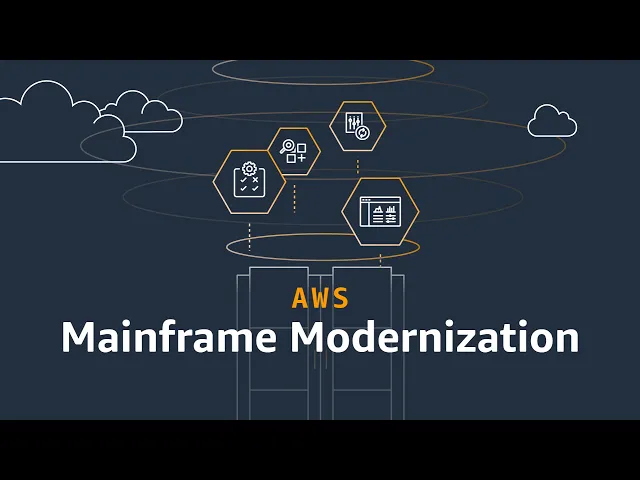
Mainframe modernization is the structured process of transforming legacy mainframe systems — hardware, applications, data, and operating processes — so they align with modern architectural, security, and business agility standards, without disrupting the mission-critical operations those systems support.
It is not a single action. It's a discipline that can include any combination of:
Migrating workloads from IBM Z to public cloud, private cloud, or hybrid cloud environments
Converting COBOL, PL/I, Assembler, or Natural code into Java, C#, or cloud-native languages
Wrapping legacy transactions in REST or GraphQL APIs so modern applications can consume them
Breaking monolithic applications into microservices deployed on Kubernetes
Modernizing the data layer — moving from VSAM, IMS, or DB2 on z/OS to cloud-native databases
Automating testing, deployment, and monitoring through DevOps and CI/CD pipelines
Embedding AI and machine learning into decision points that were previously hardcoded business rules
The Evolution of Mainframe Modernization
Two decades ago, "modernization" typically meant emulation — moving mainframe workloads onto x86 hardware running an emulation layer, changing infrastructure economics without touching the application. That approach still has a place, but it's now one option among many.
The shift since has been architectural. Enterprises no longer modernize just to cut mainframe MIPS costs; they modernize to participate in a digital transformation strategy that assumes API-first design, elastic cloud scalability, and continuous delivery as defaults. A mainframe that can't expose a real-time API to a mobile banking app or a claims-processing chatbot is a mainframe that constrains the business, regardless of how reliably it processes batch jobs overnight.
Why It Matters to the Enterprise Right Now
Three forces have converged to make this a board-level conversation rather than an infrastructure line item:
AI readiness. Generative AI and machine learning models need clean, accessible, well-governed data. Data locked in decades-old COBOL copybooks and hierarchical databases is difficult to expose to modern AI pipelines without modernization work first.
Workforce risk. The generation of engineers fluent in COBOL, JCL, and Assembler is retiring. Every year without a modernization plan increases the operational risk of running critical infrastructure that fewer people can maintain.
Cloud-native competition. Digitally native competitors ship product updates continuously. Enterprises tied to quarterly mainframe release cycles are structurally slower — a competitive disadvantage compounding year over year.
AI's role in modernization has changed the calculus entirely. Large language models can now assist with code comprehension, documentation generation, test case creation, and even first-pass COBOL-to-Java translation — dramatically reducing the time and risk that once made large-scale modernization prohibitively expensive. This is arguably the single biggest shift separating 2027 modernization projects from those attempted a decade ago.
Why Enterprises Are Modernizing Legacy Mainframes in 2027
The business case for modernization has matured. It's no longer justified purely on cost — it's justified on risk, competitiveness, and optionality.
High Maintenance Costs
Mainframe total cost of ownership has climbed as MIPS pricing, specialized talent, and vendor support contracts consume a growing share of IT budgets. Many enterprises now spend more keeping legacy systems running than they would investing in a phased modernization program with a clear payback period.
Skills Shortage
COBOL, JCL, and Assembler expertise is concentrated in a shrinking, aging workforce. Enterprises that haven't modernized or documented their systems face a real continuity risk when key personnel retire — sometimes with undocumented business logic leaving with them.
Cybersecurity
Legacy systems weren't designed for today's threat landscape. Modernization introduces contemporary identity and access management, encryption standards, and Zero Trust architecture that legacy mainframe security models often can't natively support.
Regulatory Compliance
Financial services, healthcare, and government agencies face compliance regimes — from data residency rules to real-time reporting mandates — that are far easier to satisfy with modern, auditable, API-driven architectures than with decades-old batch processes.
Cloud Adoption
Enterprise cloud strategies increasingly assume everything, including core transactional systems, can eventually participate in a hybrid or multi-cloud architecture. A mainframe that can't integrate cleanly becomes an exception that complicates every enterprise architecture decision downstream.
Digital Transformation Pressure
Customer-facing digital transformation initiatives — mobile apps, self-service portals, real-time notifications — routinely stall when they hit a mainframe backend that can only be accessed via nightly batch jobs.
Scalability
Cloud-native and containerized architectures scale elastically with demand. Mainframe capacity, by contrast, is provisioned and often billed in ways that make sudden demand spikes expensive or operationally difficult to absorb.
AI Readiness
Enterprises trying to deploy AI-driven fraud detection, underwriting, or customer service need real-time access to core data. Modernization is frequently the prerequisite step before any serious AI or analytics initiative can move from pilot to production.
Customer Experience
Modern customers expect real-time updates, instant transactions, and omnichannel consistency. Batch-oriented mainframe processes create visible lag that directly damages customer experience and retention.
Innovation Velocity
Development teams working against a legacy mainframe often face release cycles measured in months. Modernized, API-enabled architectures support the continuous delivery cadence today's product organizations expect.
Business Continuity
Aging hardware, shrinking vendor support windows, and undocumented dependencies all increase operational risk. Modernization — done incrementally and safely — actually strengthens business continuity rather than threatening it.
Operational Efficiency
Automation of testing, deployment, and monitoring — largely absent in traditional mainframe operations — reduces manual toil, human error, and the operational overhead of running critical systems.
Benefits of Mainframe Modernization
Quick Checklist — What Modernization Actually Delivers
Lower infrastructure and licensing costs
Faster feature delivery through CI/CD
Elastic, cloud-native scalability
Stronger security and compliance posture
API-enabled integration with modern applications
AI and analytics-ready data architecture
Reduced dependency on scarce legacy talent
Improved developer productivity and satisfaction
Cost Reduction
Rightsizing infrastructure — moving appropriate workloads off high-cost MIPS-based pricing and onto cloud consumption models — is often the fastest-realized benefit, though it should never be the only justification for a program.
Improved Performance
Modern architectures, tuned data stores, and horizontally scalable compute frequently outperform legacy batch processes, particularly for high-volume, latency-sensitive transactions.
Cloud Scalability
Containerized, cloud-native workloads scale up and down with actual demand, eliminating the overprovisioning that legacy capacity planning often requires.
Automation
DevOps and CI/CD pipelines replace manual deployment processes, cutting release cycles from months to days or hours while reducing human error.
Security
Modern identity management, encryption-in-transit and at-rest, and Zero Trust network principles are far easier to implement consistently on modernized architecture.
Compliance
Auditable, well-documented, API-driven systems make regulatory reporting and audit response dramatically faster than reconstructing evidence from decades-old batch logs.
Agility
Modular, microservices-based architectures let teams change one component without redeploying the entire system — a foundational requirement for enterprise agility.
Innovation
Freed from legacy constraints, engineering teams can adopt new tools, languages, and AI capabilities far more readily.
Faster Deployment
CI/CD pipelines, automated testing, and infrastructure-as-code collapse deployment timelines that once took weeks into hours.
Developer Productivity
Modern languages, tooling, and documentation dramatically lower the learning curve compared to legacy COBOL/JCL environments, widening the available talent pool.
API Enablement
Wrapping or refactoring legacy logic behind well-designed APIs lets mobile apps, partner integrations, and AI systems consume mainframe capabilities without needing to understand the mainframe itself.
Data Modernization
Migrating from hierarchical databases like IMS and flat VSAM files to modern relational or cloud-native data stores unlocks analytics, reporting, and AI use cases that were previously impractical.
AI Integration
Modernized, accessible data is the foundation for embedding machine learning into underwriting, fraud detection, forecasting, and customer service.
Analytics
Real-time, queryable data replaces overnight batch reporting, giving business leaders current information rather than yesterday's snapshot.
Business Resilience
Modern architecture, documented systems, and reduced dependency on a shrinking talent pool combine to make the enterprise more resilient to both technical and workforce disruption.
Top Mainframe Modernization Companies (2027 Rankings)
The following companies represent the market's most established mainframe modernization services providers, spanning global systems integrators, IBM-affiliated consultancies, and specialized modernization boutiques. Rankings are not numerical — enterprises should weight fit against their industry, workload complexity, and existing technology stack rather than treating this as a strict order.
1. IBM Consulting
Overview: As the steward of the IBM Z platform itself, IBM Consulting holds a unique position — it modernizes the systems it also builds. This gives it unmatched depth in hybrid strategies that keep core transaction processing on IBM Z while modernizing everything around it.
Core Expertise: IBM Z hybrid cloud strategy, watsonx-powered code assistance, COBOL-to-Java transformation, z/OS Cloud Broker integration.
Industries: Banking, insurance, government, healthcare.
Technologies: IBM Z, Red Hat OpenShift, watsonx Code Assistant for Z, Db2, CICS, IMS.
Cloud Capabilities: Deep hybrid cloud via Red Hat OpenShift on IBM Z and multi-cloud integration.
Strengths: Unmatched platform-level knowledge; AI-assisted code understanding tools built specifically for Z.
Best Suited For: Enterprises wanting to retain IBM Z as a hybrid cloud node rather than fully exit the platform.
2. Accenture
Overview: Accenture pairs large-scale systems integration muscle with a dedicated mainframe advisory practice, often serving as the prime integrator on multi-year, multi-vendor transformation programs for the world's largest enterprises.
Core Expertise: End-to-end transformation strategy, application rationalization, cloud migration factories.
Industries: Financial services, insurance, retail, telecom, public sector.
Technologies: AWS, Azure, Google Cloud, Kubernetes, myWizard automation platform.
Cloud Capabilities: Multi-cloud, hyperscaler-agnostic delivery at global scale.
Strengths: Program governance, change management, and the ability to run modernization alongside broader digital transformation initiatives.
Best Suited For: Global enterprises running modernization as one workstream within a larger transformation program.
3. Deloitte
Overview: Deloitte approaches modernization through a consulting-first lens, emphasizing business case development, risk quantification, and regulatory alignment before technical execution begins.
Core Expertise: Modernization strategy, target operating model design, regulatory-driven transformation.
Industries: Banking, insurance, government, life sciences.
Technologies: AWS, Azure, Google Cloud, application portfolio analysis tooling.
Cloud Capabilities: Advisory-led multi-cloud architecture design paired with delivery partners.
Strengths: Deep regulatory and industry-specific advisory credibility.
Best Suited For: Regulated enterprises needing a defensible, board-ready modernization business case.
4. Capgemini
Overview: Capgemini brings strong European enterprise relationships and a mature application modernization factory model, often blending onshore advisory with offshore delivery at scale.
Core Expertise: Application portfolio rationalization, COBOL refactoring, cloud-native re-platforming.
Industries: Banking, insurance, manufacturing, utilities.
Technologies: AWS, Azure, Google Cloud, Micro Focus, Kubernetes.
Cloud Capabilities: Strong hybrid and multi-cloud delivery, particularly across European regulatory environments.
Strengths: Industrialized delivery model; strong presence in European regulated industries.
Best Suited For: European and multinational enterprises needing scaled delivery with local regulatory awareness.
5. Cognizant
Overview: Cognizant operates one of the industry's larger dedicated mainframe modernization practices, with tooling and accelerators purpose-built for large-scale COBOL and PL/I transformation.
Core Expertise: Automated code analysis, COBOL-to-Java conversion, legacy application decomposition.
Industries: Banking, insurance, healthcare, travel.
Technologies: AWS, Azure, Google Cloud, proprietary code transformation accelerators.
Cloud Capabilities: Broad hyperscaler delivery experience across all three major cloud platforms.
Strengths: High-volume code conversion throughput; strong healthcare and insurance vertical depth.
Best Suited For: Enterprises with very large COBOL estates needing high-throughput, tool-assisted conversion.
6. Infosys
Overview: Infosys combines mainframe modernization with its broader digital engineering capability, frequently positioning modernization as the foundation for downstream AI and analytics initiatives.
Core Expertise: Legacy assessment, cloud migration, AI-assisted code remediation via Infosys Topaz.
Industries: Banking, insurance, retail, manufacturing.
Technologies: AWS, Azure, Google Cloud, Infosys Topaz AI suite.
Cloud Capabilities: Strong multi-cloud delivery with dedicated modernization accelerators.
Strengths: AI-augmented tooling; competitive delivery economics at scale.
Best Suited For: Enterprises wanting modernization tightly linked to a broader AI adoption roadmap.
7. Tata Consultancy Services (TCS)
Overview: TCS runs one of the largest mainframe delivery practices globally, with deep bench strength in COBOL, JCL, and Assembler alongside modern cloud-native engineering.
Core Expertise: Large-scale application migration, TCS MasterCraft transformation suite, managed mainframe operations.
Industries: Banking, insurance, government, manufacturing.
Technologies: AWS, Azure, Google Cloud, TCS MasterCraft, Kubernetes.
Cloud Capabilities: Extensive multi-cloud migration experience across regulated industries.
Strengths: Scale, delivery discipline, and proprietary transformation tooling.
Best Suited For: Large enterprises needing predictable, at-scale delivery with strong governance.
8. HCLTech
Overview: HCLTech pairs infrastructure services heritage with a growing application modernization practice, often engaging enterprises already running HCL-managed mainframe operations.
Core Expertise: Application modernization, infrastructure management, cloud-native re-engineering.
Industries: Financial services, manufacturing, telecom.
Technologies: AWS, Azure, Google Cloud, containerized microservices platforms.
Cloud Capabilities: Strong hybrid infrastructure and cloud migration delivery.
Strengths: Combined infrastructure and application modernization under one delivery model.
Best Suited For: Enterprises wanting a single partner across both mainframe operations and modernization.
9. Tech Mahindra
Overview: Tech Mahindra brings strong telecom and manufacturing vertical depth to its modernization practice, with growing investment in AI-assisted code transformation tooling.
Core Expertise: Legacy application transformation, network and OSS/BSS modernization, cloud migration.
Industries: Telecom, manufacturing, banking.
Technologies: AWS, Azure, Google Cloud, AI-based code analyzers.
Cloud Capabilities: Solid multi-cloud delivery, particularly for telecom-adjacent workloads.
Strengths: Deep telecom domain expertise alongside core mainframe skills.
Best Suited For: Telecom and communications enterprises modernizing OSS/BSS alongside core systems.
10. LTIMindtree
Overview: Formed from the LTI–Mindtree merger, LTIMindtree offers combined engineering depth and consulting capability, with a modernization practice built around measurable business outcomes.
Core Expertise: Application rationalization, cloud-native re-architecture, DevOps enablement.
Industries: Banking, insurance, manufacturing, retail.
Technologies: AWS, Azure, Google Cloud, Kubernetes, CI/CD tooling.
Cloud Capabilities: Strong multi-cloud delivery with an engineering-first culture.
Strengths: Combination of consulting rigor and hands-on engineering execution.
Best Suited For: Enterprises wanting engineering-led modernization with strong outcome accountability.
11. DXC Technology
Overview: DXC carries deep legacy roots in mainframe outsourcing (via its CSC and HPE Enterprise Services heritage), giving it substantial operational experience running — and subsequently modernizing — some of the industry's largest mainframe estates.
Core Expertise: Mainframe operations, application modernization, managed transformation services.
Industries: Insurance, banking, government, healthcare. Technologies: AWS, Azure, Micro Focus, DXC Platform X.
Cloud Capabilities: Strong hybrid cloud, particularly for enterprises transitioning from long-term outsourcing contracts.
Strengths: Deep operational history with some of the world's largest mainframe environments.
Best Suited For: Enterprises exiting long-term legacy outsourcing agreements in favor of modernization.
12. Kyndryl
Overview: Spun off from IBM as an independent infrastructure services company, Kyndryl inherited significant mainframe operational depth and has built out a modernization practice specifically for enterprises running IBM Z at scale.
Core Expertise: Mainframe managed services, hybrid cloud integration, AI-assisted operations.
Industries: Banking, insurance, government, manufacturing.
Technologies: IBM Z, Red Hat OpenShift, AWS, Azure, Google Cloud.
Cloud Capabilities: Strong hybrid cloud delivery grounded in deep infrastructure operations experience.
Strengths: Operational depth in running mission-critical mainframe environments at scale.
Best Suited For: Enterprises prioritizing operational stability throughout a phased modernization journey.
13. Wipro
Overview: Wipro's modernization practice combines traditional application transformation services with growing investment in AI-based code understanding and automated testing.
Core Expertise: Application modernization, cloud migration, automated regression testing.
Industries: Banking, insurance, healthcare, manufacturing.
Technologies: AWS, Azure, Google Cloud, Wipro's AI-based modernization accelerators.
Cloud Capabilities: Broad multi-cloud delivery experience.
Strengths: Strong testing and quality assurance practices reducing modernization risk.
Best Suited For: Risk-averse enterprises prioritizing rigorous testing throughout migration.
14. NTT DATA
Overview: NTT DATA brings strong Japanese and global enterprise relationships along with substantial infrastructure and network modernization capability alongside application transformation.
Core Expertise: Application modernization, infrastructure transformation, managed cloud operations.
Industries: Banking, manufacturing, public sector.
Technologies: AWS, Azure, Google Cloud, hybrid infrastructure platforms.
Cloud Capabilities: Strong global delivery footprint with particular strength in Asia-Pacific markets.
Strengths: Global delivery scale combined with strong regional regulatory knowledge.
Best Suited For: Multinational enterprises with significant Asia-Pacific operations.
15. EPAM Systems
Overview: EPAM is engineering-first by culture, often engaged for its strong custom software development capability layered onto modernization work requiring significant custom integration.
Core Expertise: Custom application re-engineering, cloud-native development, API design.
Industries: Financial services, healthcare, media, travel.
Technologies: AWS, Azure, Google Cloud, Kubernetes, modern microservices frameworks.
Cloud Capabilities: Strong cloud-native engineering across all major hyperscalers.
Strengths: Deep custom engineering talent, particularly valuable for complex rearchitecture projects.
Best Suited For: Enterprises pursuing full rearchitecture rather than lift-and-shift modernization.
16. Rocket Software
Overview: Rocket Software is a specialist rather than a generalist systems integrator, building modernization software products — not just services — used directly by enterprises and by many of the integrators listed above.
Core Expertise: COBOL and RPG modernization tooling, mainframe DevOps, data access modernization.
Industries: Banking, insurance, government, retail.
Technologies: Rocket Application Modernization, IBM Z, Db2, Micro Focus-adjacent tooling.
Cloud Capabilities: API and data modernization enabling hybrid and cloud integration without full workload migration.
Strengths: Product-depth in modernization tooling, particularly for enterprises wanting to modernize in place.
Best Suited For: Enterprises wanting to extend and modernize mainframe applications without a full migration.
17. Astadia
Overview: Astadia is a modernization specialist focused almost exclusively on mainframe migration, with deep experience moving IBM and Unisys mainframe workloads directly to public cloud.
Core Expertise: Automated mainframe-to-cloud migration, COBOL transformation, Unisys ClearPath modernization.
Industries: Insurance, government, financial services.
Technologies: AWS, Azure, Google Cloud, Astadia's proprietary migration factory tooling.
Cloud Capabilities: Deep specialization in automated, tool-driven cloud migration.
Strengths: Singular focus on migration reduces scope creep and accelerates delivery timelines.
Best Suited For: Enterprises wanting a focused migration specialist rather than a broad systems integrator.
18. Advanced
Overview: UK-headquartered Advanced has built a modernization practice around its OpenText- and Micro Focus-adjacent tooling, with particular strength serving UK public sector and mid-market enterprises.
Core Expertise: COBOL modernization, application refactoring, managed application services.
Industries: Public sector, financial services, insurance. Technologies: Micro Focus, AWS, Azure.
Cloud Capabilities: Solid cloud migration delivery, particularly across UK and European markets.
Strengths: Strong UK public sector relationships and mid-market delivery economics.
Best Suited For: UK and European mid-market enterprises and public sector bodies.
19. Fujitsu
Overview: Fujitsu maintains a significant mainframe modernization practice tied to its own historical mainframe hardware business, giving it particular depth in Japanese and European enterprise environments.
Core Expertise: Application modernization, infrastructure transformation, managed migration services.
Industries: Banking, government, manufacturing.
Technologies: AWS, Azure, Google Cloud, hybrid infrastructure platforms.
Cloud Capabilities: Strong regional cloud delivery, particularly across Japan and Europe.
Strengths: Deep regional relationships and historical infrastructure expertise.
Best Suited For: Enterprises with significant Japanese or European operations.
20. Atos (Eviden)
Overview: Atos, operating select modernization work under its Eviden technology brand, brings strong European public sector and manufacturing relationships to its transformation practice.
Core Expertise: Application modernization, cloud migration, cybersecurity-integrated transformation.
Industries: Public sector, manufacturing, energy.
Technologies: AWS, Azure, Google Cloud, OpenShift.
Cloud Capabilities: Strong hybrid cloud delivery with integrated security services.
Strengths: Security-first modernization approach, particularly valuable for critical infrastructure.
Best Suited For: Public sector and critical infrastructure enterprises prioritizing security throughout modernization.
21. Hexaware Technologies
Overview: Hexaware has invested heavily in AI-based automation for modernization, positioning its Amaze platform as a differentiator for accelerated, tool-assisted transformation.
Core Expertise: Cloud migration automation, application modernization, AI-assisted code transformation.
Industries: Banking, insurance, healthcare.
Technologies: AWS, Azure, Google Cloud, Hexaware Amaze platform.
Cloud Capabilities: Strong automated multi-cloud migration delivery.
Strengths: High degree of automation reducing manual migration effort and timeline.
Best Suited For: Enterprises prioritizing speed and automation over highly customized rearchitecture.
22. Persistent Systems
Overview: Persistent Systems combines strong software engineering roots with a modernization practice focused on cloud-native rearchitecture and data platform modernization.
Core Expertise: Application re-engineering, data modernization, cloud-native development.
Industries: Healthcare, financial services, technology.
Technologies: AWS, Azure, Google Cloud, Kubernetes, modern data platforms.
Cloud Capabilities: Strong cloud-native engineering, particularly for data-intensive modernization.
Strengths: Engineering depth in data platform modernization alongside application transformation.
Best Suited For: Enterprises where data modernization is as critical as application modernization.
23. Mphasis
Overview: Mphasis brings a strong financial services vertical focus to its modernization practice, with dedicated accelerators built around common banking and capital markets modernization patterns.
Core Expertise: Core banking modernization, application transformation, cloud migration.
Industries: Banking, capital markets, insurance.
Technologies: AWS, Azure, Google Cloud, Mphasis modernization accelerators.
Cloud Capabilities: Strong cloud delivery tailored to financial services regulatory requirements.
Strengths: Deep banking and capital markets domain expertise.
Best Suited For: Banks and capital markets firms modernizing core transaction systems.
24. Birlasoft
Overview: Birlasoft pairs enterprise application modernization with strong domain expertise in manufacturing and life sciences, often engaged for mid-size transformation programs.
Core Expertise: Application modernization, ERP-adjacent integration, cloud migration.
Industries: Manufacturing, life sciences, energy.
Technologies: AWS, Azure, Google Cloud.
Cloud Capabilities: Solid multi-cloud delivery for mid-size enterprise transformation.
Strengths: Strong manufacturing and life sciences domain knowledge.
Best Suited For: Mid-size manufacturing and life sciences enterprises.
25. Coforge
Overview: Coforge has built a focused modernization practice within insurance and travel technology, combining domain-specific platforms with core application transformation services.
Core Expertise: Insurance core system modernization, application transformation, cloud migration.
Industries: Insurance, travel, banking.
Technologies: AWS, Azure, Google Cloud.
Cloud Capabilities: Strong cloud delivery tailored to insurance and travel technology stacks.
Strengths: Deep insurance and travel vertical specialization.
Best Suited For: Insurance carriers and travel technology companies modernizing core platforms.
26. Micro Focus (OpenText)
Overview: Now part of OpenText, Micro Focus remains one of the most widely deployed modernization software providers, offering COBOL analysis, refactoring, and cloud enablement tooling used both directly by enterprises and embedded within many systems integrators' delivery models.
Core Expertise: COBOL analysis and refactoring tooling, mainframe DevOps enablement, application portfolio analysis.
Industries: Banking, insurance, government, retail — largely industry-agnostic as a tooling vendor.
Technologies: Enterprise Analyzer, Enterprise Server, Visual COBOL.
Cloud Capabilities: Enables cloud deployment of COBOL applications without full rewrite.
Strengths: Deep, mature tooling ecosystem embedded across the broader modernization industry.
Best Suited For: Enterprises wanting to modernize in place with proven, widely adopted tooling rather than a full systems integrator engagement.
Pro Tip: Many enterprises pair a specialist tooling vendor (like Rocket Software or Micro Focus) with a systems integrator (like TCS, Accenture, or Cognizant) — the tooling vendor supplies the modernization software, while the integrator provides delivery, program management, and change management around it.
Comparison Table: Mainframe Modernization Companies at a Glance
Company | Experience | Key Industries | Cloud Platforms | COBOL Expertise | Migration Focus | Managed Services | AI/Automation | Global Presence |
|---|---|---|---|---|---|---|---|---|
IBM Consulting | Very High | Banking, Insurance, Gov | Hybrid (Red Hat OpenShift) | Very High | Hybrid/Rehost | Yes | watsonx Code Assistant | Global |
Accenture | Very High | All major verticals | AWS, Azure, GCP | High | Full lifecycle | Yes | myWizard | Global |
Deloitte | Very High | Regulated industries | Advisory-led | Moderate | Strategy-led | Limited | Portfolio analytics | Global |
Capgemini | High | Banking, Manufacturing | AWS, Azure, GCP | High | Refactor/Replatform | Yes | AI accelerators | Global |
Cognizant | High | Banking, Insurance, Healthcare | AWS, Azure, GCP | Very High | Refactor | Yes | Proprietary tooling | Global |
Infosys | High | Banking, Retail | AWS, Azure, GCP | High | Refactor/Cloud | Yes | Topaz AI Suite | Global |
TCS | Very High | Banking, Insurance, Gov | AWS, Azure, GCP | Very High | Full lifecycle | Yes | MasterCraft | Global |
HCLTech | High | Financial, Telecom | AWS, Azure, GCP | High | Full lifecycle | Yes | AI-based accelerators | Global |
Tech Mahindra | Moderate-High | Telecom, Manufacturing | AWS, Azure, GCP | Moderate | Migration | Yes | AI code analyzers | Global |
LTIMindtree | High | Banking, Retail | AWS, Azure, GCP | High | Refactor | Yes | CI/CD-integrated AI | Global |
DXC Technology | Very High | Insurance, Banking, Gov | AWS, Azure | High | Ops + Migration | Yes | Platform X | Global |
Kyndryl | Very High | Banking, Insurance, Gov | Hybrid + Multi-cloud | Very High | Managed hybrid | Yes | AI-based ops | Global |
Wipro | High | Banking, Healthcare | AWS, Azure, GCP | High | Refactor | Yes | AI-based testing | Global |
NTT DATA | High | Banking, Manufacturing | AWS, Azure, GCP | Moderate-High | Migration | Yes | Hybrid infra AI | Global (APAC strength) |
EPAM Systems | High | Financial, Healthcare | AWS, Azure, GCP | Moderate | Rearchitect | Limited | Engineering-led | Global |
Rocket Software | Very High (tooling) | Banking, Insurance | Hybrid enablement | Very High | Modernize-in-place | Product-based | DevOps tooling | Global |
Astadia | Very High (specialist) | Insurance, Gov | AWS, Azure, GCP | Very High | Automated migration | Limited | Migration factory | Global |
Advanced | Moderate-High | UK Public Sector | AWS, Azure | High | Refactor | Yes | Moderate | UK/Europe |
Fujitsu | High | Banking, Gov | AWS, Azure, GCP | Moderate-High | Migration | Yes | Moderate | Japan/Europe strength |
Atos (Eviden) | High | Public Sector, Energy | AWS, Azure, GCP | Moderate | Secure migration | Yes | Security-integrated | Global (Europe strength) |
Hexaware | Moderate-High | Banking, Healthcare | AWS, Azure, GCP | Moderate-High | Automated migration | Yes | Amaze Platform | Global |
Persistent Systems | Moderate-High | Healthcare, Financial | AWS, Azure, GCP | Moderate | Rearchitect | Limited | Data-focused AI | Global |
Mphasis | Moderate-High | Banking, Capital Markets | AWS, Azure, GCP | Moderate-High | Core modernization | Yes | Moderate | Global |
Birlasoft | Moderate | Manufacturing, Life Sciences | AWS, Azure, GCP | Moderate | Migration | Limited | Moderate | Global |
Coforge | Moderate-High | Insurance, Travel | AWS, Azure, GCP | Moderate-High | Core modernization | Yes | Moderate | Global |
Micro Focus (OpenText) | Very High (tooling) | Industry-agnostic | Cloud-enabling tooling | Very High | Modernize-in-place | Product-based | Refactoring tools | Global |
Note: Ratings reflect general market positioning and should be validated against current RFP responses and reference calls, as capabilities and partnerships evolve.
How to Choose the Right Mainframe Modernization Company
Choosing a modernization partner is as much about organizational fit as technical capability. Use the following 25-point framework to evaluate vendors during RFP and selection.
Proven mainframe experience. Does the vendor have a genuine, longstanding mainframe practice — not a general cloud consultancy adding modernization to its service list?
COBOL and legacy language depth. Can they demonstrate hands-on COBOL, PL/I, Assembler, or Natural expertise, not just tooling familiarity?
Industry-specific experience. Have they modernized systems in your specific industry, with its specific regulatory and operational constraints?
Reference customers. Can they provide verifiable references from organizations of comparable size and complexity?
Modernization strategy flexibility. Do they offer the full spectrum — rehost, replatform, refactor, rearchitect — or push a single approach regardless of fit?
Cloud platform expertise. Do they have certified expertise across your preferred hyperscaler (AWS, Azure, or Google Cloud)?
AI-assisted tooling. Do they use AI for code comprehension, test generation, or automated refactoring — and can they show it working, not just describe it?
Data migration capability. Can they demonstrate a track record moving complex hierarchical and relational data without loss or corruption?
Security and compliance expertise. Do they understand your regulatory environment well enough to build compliance into the architecture from day one?
Managed services capability. Can they operate the modernized environment post-migration, or only build it?
Program governance model. Do they have a mature methodology for managing multi-year, multi-team transformation programs?
Risk management approach. How do they handle rollback, parallel-run validation, and phased cutover to limit business risk?
Talent and staffing model. Will you get senior, experienced engineers, or a rotating junior delivery team?
Cultural and communication fit. Will their working style and communication cadence align with your internal teams?
Pricing model transparency. Is pricing structured around outcomes and milestones, or open-ended time-and-materials with unclear accountability?
Total cost of ownership modeling. Can they build a credible, defensible TCO comparison between current-state and future-state architecture?
Testing and quality assurance rigor. What automated testing and validation processes do they use to prevent regression in business-critical logic?
Change management support. Do they help manage the organizational and workforce transition, not just the technical one?
Post-migration support. What SLAs and support model do they offer once the modernized system is in production?
Innovation roadmap alignment. Can they show how the modernized architecture will support your AI, analytics, and future digital initiatives?
Financial stability. Is the vendor financially stable enough to support a multi-year commitment?
Partnership ecosystem. Do they have strong partnerships with IBM, major hyperscalers, and modernization tooling vendors like Micro Focus or Rocket Software?
Scalability of delivery model. Can they scale the engagement up or down as program scope evolves?
Intellectual property and accelerators. Do they bring proprietary tools and accelerators that reduce timeline and risk, or rely entirely on manual effort?
Long-term strategic partnership potential. Are they positioned to be a long-term technology partner, or purely a project-based vendor?
Warning: Be cautious of any vendor promising a full mainframe exit within an unrealistically short timeline. Legitimate modernization programs for large, complex estates typically span 18 months to several years — vendors who dismiss this reality are underestimating risk, not demonstrating superior capability.
Mainframe Modernization Strategies
Modernization is not one path — it's a portfolio of strategies applied selectively across an application estate based on business criticality, technical debt, and cost-benefit analysis.
Rehosting moves an application "as-is" to a new infrastructure environment — often cloud-based emulation — with minimal code changes. It's the fastest, lowest-risk starting point, though it defers deeper architectural benefits.
Replatforming makes targeted changes to run an application on a new platform without fully rewriting it, such as moving a COBOL application to run on a cloud-hosted COBOL runtime.
Refactoring restructures and optimizes existing code — often converting COBOL to Java or C# — while preserving business logic, improving maintainability and enabling cloud-native deployment.
Rearchitecting goes further, redesigning the application's architecture entirely, typically decomposing a monolith into microservices to gain full cloud-native scalability and agility.
Replacing retires the legacy application in favor of a commercial off-the-shelf or SaaS solution — appropriate when the legacy system supports commodity functionality rather than unique competitive logic.
Retiring eliminates applications entirely when their function is redundant or no longer needed — an underused but valuable strategy for simplifying the estate before modernizing what remains.
Hybrid modernization applies multiple strategies simultaneously across a portfolio — rehosting low-priority workloads while refactoring core differentiators — matching effort to business value.
Incremental modernization breaks a large program into smaller, independently deployable phases, reducing risk and delivering measurable value throughout a multi-year journey rather than waiting for a single "big bang" cutover.
AI-assisted modernization uses machine learning and generative AI to accelerate code comprehension, automate test generation, and assist first-pass code translation — substantially compressing timelines that once required purely manual effort.
Containerization packages modernized application components for deployment on Kubernetes, enabling consistent, portable, and scalable operations across hybrid and multi-cloud environments.
API-first modernization wraps existing mainframe transactions in well-designed APIs before any deeper code transformation, quickly unlocking integration with modern applications while a longer-term modernization plan proceeds in parallel.
Step-by-Step Mainframe Modernization Roadmap
1. Assessment. Inventory the full application and data estate, understanding dependencies, business criticality, and technical debt before any decisions are made.
2. Discovery. Use automated code analysis tools — increasingly AI-assisted — to map data flows, business rules, and integration points hidden inside legacy code.
3. Business Analysis. Align technical findings with business priorities, identifying which applications are true differentiators versus commodity functions.
4. Architecture Design. Design the target-state architecture — cloud, hybrid, containerized, API-driven — that will support both current operations and future digital initiatives.
5. Planning. Sequence the modernization program into phases, balancing quick wins against longer-term architectural transformation, with clear governance and success metrics.
6. Migration. Execute the technical transformation — rehosting, refactoring, or rearchitecting — following the strategy selected for each application in the portfolio.
7. Testing. Validate functional equivalence, performance, and security through automated regression testing and parallel-run comparison against the legacy system.
8. Optimization. Tune the modernized environment for performance, cost efficiency, and operational reliability once in production.
9. Monitoring. Implement observability and monitoring to catch issues early and provide visibility the legacy environment likely never offered.
10. Continuous Improvement. Treat modernization as an ongoing discipline — not a one-time project — continuing to refine architecture as business needs and technology evolve.
Industry Use Cases
Banking: Core banking modernization enables real-time payments, open banking APIs, and faster regulatory reporting while preserving the transactional integrity legacy core systems were built for.
Insurance: Claims processing and underwriting modernization allows real-time quoting, AI-assisted risk assessment, and faster policy issuance — critical as digital-first insurers compete for the same customers.
Healthcare: Modernizing claims and records systems supports interoperability requirements, real-time eligibility checks, and the data accessibility needed for AI-assisted clinical and administrative tools.
Government: Agencies modernize to meet citizen expectations for digital services, improve interagency data sharing, and address the acute COBOL skills shortage affecting public sector systems specifically.
Manufacturing: ERP and supply chain systems built on legacy platforms are modernized to support real-time inventory visibility, IoT integration, and more resilient, transparent supply chains.
Retail: Legacy inventory and order management modernization enables real-time omnichannel fulfillment, dynamic pricing, and the personalization capabilities modern retail competition requires.
Telecom: OSS/BSS modernization supports faster service provisioning, real-time billing, and the network agility needed to support 5G and evolving service models.
Energy: Utilities modernize legacy billing and grid management systems to support smart grid integration, real-time usage data, and evolving regulatory requirements around sustainability reporting.
Education: Student information and administrative systems are modernized to support digital-first enrollment, financial aid processing, and integration with modern learning platforms.
Transportation: Legacy scheduling and logistics systems are modernized to support real-time tracking, dynamic routing, and integration with modern fleet management platforms.
Logistics: Warehouse and freight management modernization enables real-time visibility across complex, multi-party supply chains — increasingly a customer expectation rather than a differentiator.
SaaS/Technology: Technology companies with legacy transactional cores modernize to support the API-first, multi-tenant architecture expected of modern SaaS products.
Common Challenges in Mainframe Modernization
Skills Shortage: Finding personnel who understand both legacy COBOL logic and modern cloud architecture remains one of the single biggest constraints on program pace.
Downtime Risk: Mission-critical systems often can't tolerate extended outages, requiring careful phased cutover and parallel-run strategies to avoid business disruption.
Data Migration Complexity: Decades of accumulated data, inconsistent formats, and undocumented transformations make data migration one of the highest-risk elements of any program.
Integration Complexity: Legacy systems are often deeply interconnected with dozens of dependent applications, making isolated modernization far harder than it initially appears.
Compliance Requirements: Regulated industries must maintain continuous compliance throughout the transition, not just in the end state — complicating phased migration approaches.
Security Gaps: Migrating a system built decades before modern security standards existed requires deliberate architecture work, not just a "lift and shift" of legacy assumptions.
Undocumented Legacy Code: Business logic embedded in code with little or no documentation creates significant discovery risk, particularly as the engineers who wrote it retire.
Risk Management: Balancing the risk of inaction (continuing to run unsupported legacy systems) against the risk of a poorly executed migration requires disciplined program governance.
Cost Control: Modernization programs can experience significant scope creep without clear governance, milestone-based accountability, and realistic budgeting from the outset.
Vendor Lock-In: Enterprises should evaluate whether a modernization approach creates new dependency on a single vendor's proprietary tooling, potentially trading one form of lock-in for another.
Future Trends in Mainframe Modernization (2027 and Beyond)
AI-Assisted Code Conversion: Large language models are increasingly capable of understanding legacy COBOL logic and assisting with first-pass translation, dramatically compressing what were once multi-year manual refactoring efforts.
Generative AI for Documentation and Testing: Generative AI tools now assist in reconstructing missing documentation and generating comprehensive test cases directly from legacy code — addressing one of modernization's longest-standing bottlenecks.
Cloud-Native Mainframe Integration: Rather than a binary "stay or leave" decision, more enterprises are running IBM Z as one node within a broader hybrid cloud architecture via platforms like Red Hat OpenShift.
Hyperautomation: End-to-end automation — combining RPA, AI, and orchestration — is increasingly applied across the full modernization lifecycle, from discovery through testing and deployment.
Platform Engineering: Enterprises are building internal developer platforms that abstract modernized infrastructure complexity, letting application teams move faster without needing deep infrastructure expertise.
Observability: Modern observability tooling — largely absent in traditional mainframe operations — is becoming a standard expectation for any newly modernized environment.
Edge Computing: For industries like manufacturing and retail, modernized architectures increasingly extend processing to the edge, reducing latency for real-time operational decisions.
Quantum-Ready Infrastructure: While still early, some highly regulated industries are beginning to factor quantum-resistant cryptography into modernization architecture decisions.
Zero Trust Security: Modernization programs increasingly build Zero Trust principles into the target architecture from day one rather than retrofitting security after the fact.
Green IT and Sustainability: Cloud-native, elastically scaled infrastructure typically carries a smaller energy footprint than continuously running mainframe capacity, making sustainability an increasingly cited modernization driver.
Expert Tips: 20 Recommendations from Enterprise Modernization Consultants
Start with a comprehensive assessment before committing to a strategy — don't let a vendor's preferred approach drive the decision before your data does.
Prioritize business-critical applications for the most careful, incremental treatment; save aggressive timelines for lower-risk workloads.
Involve business stakeholders early — modernization decisions have operational impact far beyond IT.
Document legacy business logic before it disappears with retiring staff, even if formal modernization is still months away.
Use AI-assisted code analysis early in discovery — it dramatically accelerates understanding of undocumented systems.
Build a realistic, milestone-based business case rather than promising unrealistic cost savings to secure budget approval.
Choose a modernization strategy per-application, not for the entire estate as a single decision.
Insist on parallel-run testing for mission-critical systems before full cutover.
Invest in automated regression testing from the start — manual testing alone cannot validate complex legacy logic reliably.
Plan for organizational change management with the same rigor as technical migration planning.
Avoid a "big bang" cutover approach for complex, interconnected systems — incremental phasing reduces risk substantially.
Negotiate outcome-based, milestone-driven vendor contracts rather than open-ended time-and-materials engagements.
Build internal capability alongside external vendor delivery so your organization isn't permanently dependent on the vendor.
Treat data quality and data governance as a first-class workstream, not an afterthought to application migration.
Validate vendor AI tooling claims with a proof-of-concept on your actual code, not marketing demonstrations.
Maintain a rollback plan for every phase of migration, regardless of how confident the team is in the cutover plan.
Align modernization architecture decisions with your broader enterprise cloud and security strategy, not in isolation.
Set clear, measurable success metrics — cost, performance, deployment velocity — before the program begins, not after.
Communicate progress transparently to the board and business stakeholders throughout a multi-year program to sustain executive sponsorship.
Treat modernization as continuous rather than a one-time project — build the operating model to sustain ongoing improvement after go-live.
Mistakes to Avoid During Mainframe Modernization
Choosing a strategy before completing assessment. Committing to full rearchitecture (or a simple rehost) before understanding the actual application portfolio often leads to costly rework.
Underestimating data migration complexity. Data migration is frequently the most underestimated element of a modernization program, leading to schedule and budget overruns.
Ignoring undocumented business logic. Assuming legacy code is straightforward without deep discovery risks losing critical business rules during transformation.
Attempting a "big bang" cutover. All-at-once migrations for complex, interconnected systems dramatically increase risk compared to phased approaches.
Underinvesting in testing. Insufficient regression testing is one of the leading causes of post-migration production incidents.
Selecting a vendor based on price alone. The lowest bid often reflects insufficient senior expertise or unrealistic timeline assumptions.
Failing to secure sustained executive sponsorship. Multi-year programs routinely stall without consistent leadership support through inevitable setbacks.
Neglecting change management. Technical success without organizational buy-in often results in poor adoption of the new system.
Overlooking security architecture. Migrating legacy assumptions forward without redesigning for modern security standards creates new vulnerabilities.
Ignoring compliance requirements mid-migration. Compliance obligations don't pause during a transition — they must be maintained continuously.
Underestimating integration dependencies. Failing to map all system dependencies before migration often surfaces painful surprises mid-program.
Not building in rollback capability. Proceeding without a tested rollback plan turns manageable issues into business-critical incidents.
Over-relying on a single vendor's proprietary tooling. This can trade mainframe lock-in for a different, equally constraining form of vendor dependency.
Setting unrealistic timelines. Aggressive, unvalidated timelines set programs up for perceived failure even when technical progress is sound.
Failing to build internal capability. Full dependency on external vendors leaves the organization vulnerable once the engagement ends.
Skipping a pilot phase. Moving directly to large-scale migration without validating the approach on a smaller, representative application increases risk significantly.
Ignoring performance benchmarking. Failing to establish legacy system performance baselines makes it difficult to validate the modernized system truly performs better.
Underestimating organizational resistance. Technical teams accustomed to legacy systems may resist change without deliberate engagement and communication.
Not planning for AI and analytics use cases early. Retrofitting AI readiness into an architecture after the fact is far more costly than designing for it upfront.
Treating modernization as a one-time project. Programs that lack a plan for continuous improvement after go-live often see technical debt reaccumulate within a few years.
Frequently Asked Questions
1. What is mainframe modernization?
Mainframe modernization is the process of transforming legacy mainframe systems — including hardware, applications, and data — to align with modern architectural, security, and business agility standards. It can involve migrating workloads to the cloud, converting COBOL or PL/I code into modern languages like Java, wrapping legacy transactions in APIs, or rearchitecting monolithic applications into microservices. The goal isn't necessarily to eliminate the mainframe entirely; many enterprises retain core transaction processing on IBM Z while modernizing the surrounding architecture through hybrid cloud integration. Modernization is typically driven by rising maintenance costs, a shrinking pool of COBOL-skilled talent, cybersecurity requirements, and the need to support real-time digital experiences and AI-driven initiatives. It's best approached as a phased, multi-year program rather than a single project, with different strategies applied to different applications based on business criticality and technical debt.
2. Why are enterprises modernizing mainframes now instead of continuing to maintain them?
Several pressures have converged to accelerate modernization timelines. The workforce with deep COBOL, JCL, and Assembler expertise is retiring, creating real operational risk. Maintenance costs for mainframe infrastructure and specialized talent continue rising. Customers and regulators increasingly expect real-time digital experiences and reporting that batch-oriented legacy systems struggle to support. Perhaps most significantly, enterprises pursuing AI and advanced analytics initiatives need accessible, well-governed data — something that's difficult to achieve while critical data remains locked in decades-old hierarchical databases and COBOL copybooks. Competitive pressure from digitally native competitors, who can ship features far faster, adds urgency. Together, these factors have shifted modernization from a discretionary infrastructure decision to a board-level strategic priority for most large enterprises operating legacy mainframe environments.
3. How much does mainframe modernization cost?
Cost varies enormously based on the size of the application estate, the strategy chosen, and the industry's regulatory complexity. A targeted rehosting project for a handful of applications might cost a few hundred thousand dollars, while a full enterprise-wide rearchitecture of a large bank's core systems can run into tens of millions of dollars over several years. Rehosting and replatforming are generally the least expensive strategies, since they preserve most existing code. Refactoring and rearchitecting cost more upfront but typically deliver greater long-term value through improved agility and reduced technical debt. Most enterprises build a phased business case, starting with lower-cost, lower-risk workloads to demonstrate value before committing to larger-scale transformation. Vendors should be able to provide a detailed total cost of ownership model comparing current-state and future-state costs specific to your environment.
4. How long does a mainframe modernization project take?
Timelines depend heavily on scope and strategy. A focused rehosting project for a small application set might take a few months. A comprehensive enterprise-wide modernization program — covering a bank's core systems or a large insurer's policy administration platform — typically spans 18 months to several years, often executed in phases. Enterprises attempting to compress large, complex programs into unrealistically short timelines frequently underestimate risk, particularly around data migration and integration testing. Most successful programs adopt an incremental approach, delivering value in stages rather than pursuing a single "big bang" cutover. AI-assisted code analysis and automated migration tooling have meaningfully compressed timelines compared to a decade ago, but complex, highly regulated environments still require careful, phased execution to avoid business disruption.
5. What's the difference between rehosting, replatforming, and refactoring?
Rehosting moves an application to new infrastructure — often a cloud-based mainframe emulation environment — with minimal changes to the underlying code, offering the fastest, lowest-risk starting point. Replatforming makes targeted modifications to run the application on a new platform, such as a cloud-hosted COBOL runtime, without a full rewrite. Refactoring goes further, restructuring and often translating the code itself — for example, converting COBOL to Java — while preserving the original business logic, improving long-term maintainability and enabling cloud-native deployment. Each approach carries different cost, risk, and long-term value tradeoffs: rehosting is fastest but delivers the least architectural benefit, while refactoring requires more investment but positions the application for genuine cloud-native scalability, easier maintenance, and a broader available talent pool going forward.
6. Should we fully replace our mainframe or modernize it in place?
For most large enterprises, the answer isn't binary. IBM Z remains extraordinarily capable for high-volume transaction processing, and full replacement is often more expensive and riskier than a hybrid approach. Many organizations retain core transaction processing on the mainframe while modernizing the surrounding architecture — exposing transactions through APIs, integrating with cloud services via platforms like Red Hat OpenShift, and applying AI-assisted tooling to improve maintainability. Full replacement makes more sense when the legacy application supports commodity functionality better served by a commercial off-the-shelf or SaaS solution, or when the technical debt has become so severe that continued maintenance is no longer viable. The right answer depends on a detailed assessment of each application's business criticality, technical condition, and strategic importance — not a one-size-fits-all mainframe exit decision.
7. What is COBOL modernization?
COBOL modernization refers specifically to transforming applications written in COBOL — a programming language still running much of the world's core banking, insurance, and government transaction processing. This can involve refactoring COBOL into a modern language like Java or C#, wrapping COBOL logic in APIs so modern applications can consume it without full rewrite, or migrating COBOL applications to run in cloud-hosted environments via tools like Micro Focus Enterprise Server. AI-assisted code analysis has become increasingly important in COBOL modernization, helping teams understand decades-old, often undocumented business logic before transforming it. Given the shrinking pool of COBOL-skilled engineers, many enterprises treat COBOL modernization as an urgent workforce risk mitigation strategy as much as a technical or cost initiative.
8. Can AI actually convert COBOL code to Java automatically?
AI tools have made substantial progress in assisting COBOL-to-Java conversion, but "automatic" conversion still requires significant human oversight. Large language models and specialized code-transformation tools can generate a strong first-pass translation, dramatically reducing the manual effort required compared to a decade ago. However, business logic embedded in decades-old COBOL is often complex, undocumented, and full of edge cases that automated tools may not fully capture. Experienced modernization teams use AI to accelerate discovery, generate initial translations, and create test cases — while still applying rigorous human review, parallel-run testing, and validation against the original system's behavior. Enterprises should be skeptical of any vendor claiming fully automated, zero-risk conversion at scale; the realistic value of AI today is acceleration and risk reduction, not complete automation.
9. What are the biggest risks in a mainframe modernization project?
The most significant risks include data migration errors, given the complexity and volume of legacy data accumulated over decades; undocumented business logic that gets lost or misinterpreted during transformation; integration failures with the many dependent systems connected to the mainframe; and operational disruption if testing and cutover planning are insufficient. Compliance risk is also significant in regulated industries, where the modernized system must maintain continuous regulatory adherence throughout the transition. Organizational risk — including resistance to change and loss of institutional knowledge as legacy experts retire — is often underestimated relative to technical risk. Mitigating these risks requires thorough assessment, incremental phased execution, rigorous automated testing, parallel-run validation, and a well-governed program management structure with clear rollback plans at every stage.
10. How do I choose between the major mainframe modernization companies?
Start by evaluating proven mainframe-specific experience — not just general cloud consulting credentials — alongside demonstrated depth in your specific industry and regulatory environment. Request verifiable reference customers of comparable size and complexity, and validate their AI-assisted tooling claims through a proof-of-concept on your actual code rather than a marketing demonstration. Assess whether they offer flexibility across modernization strategies rather than pushing a single approach, and evaluate their program governance methodology for managing multi-year transformation. Consider whether you need a large systems integrator for end-to-end delivery, a specialist migration vendor for focused execution, or a tooling vendor paired with an integration partner. Pricing transparency, cultural fit, and post-migration managed services capability all matter as much as raw technical capability during final selection.
11. What industries need mainframe modernization the most?
Banking, insurance, and government agencies represent the largest concentration of mainframe-dependent legacy systems, given their historical reliance on mainframes for core transaction processing built decades ago. Healthcare organizations running legacy claims and records systems face growing interoperability requirements that drive modernization urgency. Manufacturing and retail enterprises with legacy ERP and inventory systems are modernizing to support real-time supply chain visibility and omnichannel operations. Telecom providers modernize OSS/BSS systems to support faster service provisioning and evolving network technologies. While the specific drivers vary — regulatory pressure in financial services, interoperability in healthcare, real-time visibility in retail and manufacturing — the underlying pattern is consistent: any enterprise whose core mainframe systems constrain digital transformation, AI adoption, or competitive agility has a strong business case for modernization.
12. What is the difference between rearchitecting and refactoring?
Refactoring restructures and often translates existing code — for example, converting COBOL to Java — while preserving the original application's overall structure and business logic. It improves maintainability and enables cloud deployment without fundamentally redesigning how the application works. Rearchitecting goes significantly further, redesigning the application's architecture entirely — typically decomposing a monolithic application into independently deployable microservices. Rearchitecting delivers the greatest long-term agility and scalability benefits, since each component can be updated, scaled, and deployed independently, but it requires substantially more investment, time, and risk management than refactoring alone. Most enterprises apply refactoring to a broader set of applications while reserving full rearchitecture for the highest-value, most strategically important systems where the long-term agility benefit clearly justifies the additional investment and complexity involved.
13. Is mainframe modernization the same as cloud migration?
Not exactly, though the two are closely related. Cloud migration refers specifically to moving workloads — applications, data, and infrastructure — to a cloud environment. Mainframe modernization is a broader discipline that can include cloud migration as one component, alongside code refactoring, API enablement, data modernization, and process automation, regardless of whether the end state is cloud, hybrid, or an updated on-premises environment. Some modernization strategies, like rehosting, involve direct cloud migration. Others, like modernizing COBOL code to run more efficiently in place, don't necessarily involve moving to the cloud at all. Many enterprises pursue a hybrid outcome — retaining core transaction processing on IBM Z while integrating with cloud services through platforms like Red Hat OpenShift — making modernization and cloud migration overlapping but distinct concepts.
14. What is hybrid cloud's role in mainframe modernization?
Hybrid cloud has become central to modern mainframe strategy, offering a middle path between full mainframe retention and full cloud migration. Platforms like Red Hat OpenShift on IBM Z allow enterprises to run containerized, cloud-native workloads directly alongside traditional mainframe transaction processing, enabling gradual modernization without a disruptive full migration. This approach lets enterprises expose mainframe transactions through modern APIs, integrate with public cloud services for analytics and AI workloads, and adopt DevOps practices — all while retaining the mainframe's proven reliability for core transaction processing. For many large, regulated enterprises, hybrid cloud isn't a temporary stepping stone but a long-term target architecture, balancing the mainframe's transactional strengths against the agility, scalability, and AI-readiness benefits that cloud-native architecture provides for everything built around it.
15. What skills are needed for a successful modernization program?
Successful programs require a blend of legacy and modern expertise: engineers who understand COBOL, JCL, and mainframe data structures like VSAM and IMS, paired with cloud architects, DevOps engineers, and modern application developers skilled in Java, microservices, and API design. Program and change management expertise is equally critical, given the organizational complexity of multi-year transformation initiatives. Increasingly, familiarity with AI-assisted code analysis and transformation tooling has become a valuable differentiator, helping teams accelerate discovery and translation work. Since legacy mainframe expertise is scarce and often concentrated in an aging internal workforce, many enterprises rely heavily on external modernization partners for this specific skill set while building internal cloud-native capability in parallel, ensuring the organization isn't permanently dependent on external vendors once the program concludes.
16. How do you migrate mainframe data without losing integrity?
Data migration integrity depends on rigorous mapping, validation, and testing throughout the process. Teams typically begin by cataloging legacy data structures — including hierarchical formats like IMS and flat VSAM files — and mapping them to the target data model, whether relational, cloud-native, or otherwise. Automated data validation tools compare source and target data at scale to catch discrepancies that manual review would miss. Parallel-run testing, where the legacy and modernized systems process the same transactions simultaneously for a period, provides a strong integrity check before full cutover. Incremental migration, rather than a single large data transfer, reduces risk by allowing issues to surface and be resolved at smaller scale. Given how error-prone and high-stakes data migration can be, most experienced modernization vendors treat it as its own dedicated workstream with specialized tooling and expertise.
17. What is API-first modernization?
API-first modernization is a strategy that prioritizes wrapping existing legacy mainframe transactions in well-designed APIs before pursuing deeper code transformation. This allows modern applications — mobile banking apps, partner integrations, AI-driven tools — to consume mainframe functionality through standard REST or GraphQL interfaces without needing to understand or interact with the underlying legacy code directly. It's often the fastest way to unlock digital transformation initiatives that are blocked by mainframe integration challenges, since it can be implemented in parallel with a longer-term refactoring or rearchitecture roadmap. API-first modernization doesn't eliminate technical debt in the underlying legacy code, but it decouples the pace of digital innovation from the pace of deeper mainframe transformation — a pragmatic approach for enterprises needing to show rapid progress while a more comprehensive modernization program unfolds over a longer timeline.
18. How does mainframe modernization support AI initiatives?
AI and machine learning models depend on accessible, well-structured, real-time data — something decades-old hierarchical databases and COBOL copybooks weren't designed to provide. Modernization unlocks AI readiness by migrating data to accessible modern data stores, exposing transactions through APIs that AI systems can consume in real time, and replacing batch-oriented processes with the continuous data flows AI-driven decision-making requires. Beyond enabling downstream AI use cases like fraud detection or underwriting automation, AI itself now plays an active role within modernization programs — assisting with code comprehension, generating documentation for undocumented legacy systems, and accelerating COBOL-to-Java translation. This dual relationship, where modernization both enables and is accelerated by AI, is one of the defining characteristics separating 2027-era modernization programs from earlier generations that lacked these tools.
19. What is the biggest mistake enterprises make in modernization projects?
One of the most common and costly mistakes is committing to a specific modernization strategy — full rearchitecture, or conversely a simple rehost — before completing a thorough assessment of the actual application portfolio. This often leads to significant rework once the true complexity and interdependencies of the legacy estate become clear mid-program. Closely related is underestimating data migration complexity, which frequently proves more time-consuming and risky than application code transformation itself. Attempting an all-at-once "big bang" cutover for complex, interconnected systems, rather than a phased incremental approach, also significantly increases risk. Underlying many of these mistakes is insufficient executive sponsorship and change management, which causes otherwise well-planned technical programs to stall or lose organizational support partway through a multi-year transformation journey.
20. Should we build an internal modernization team or rely entirely on vendors?
Most successful enterprises pursue a hybrid model, relying on external vendor expertise for specialized legacy skills — deep COBOL knowledge, proven migration tooling, and delivery experience at scale — while building internal capability in parallel so the organization isn't permanently dependent on external partners. Full reliance on vendors risks leaving the enterprise without the institutional knowledge needed to maintain and evolve the modernized system after the engagement ends. Conversely, attempting a purely internal effort without experienced modernization partners often underestimates the complexity and risk involved, particularly for large, mission-critical estates. A well-structured program typically embeds internal engineers alongside vendor teams throughout delivery, explicitly transferring knowledge and capability as the program progresses, so the organization retains meaningful ownership of the modernized architecture going forward.
21. What is the role of Kubernetes in mainframe modernization?
Kubernetes has become the standard platform for deploying and managing containerized application components that emerge from modernization efforts, particularly when applications are rearchitected into microservices. It provides the orchestration layer that enables modernized workloads to scale elastically, deploy consistently across hybrid and multi-cloud environments, and integrate with modern DevOps and CI/CD pipelines. For enterprises pursuing hybrid architectures, platforms like Red Hat OpenShift extend Kubernetes capability directly onto IBM Z hardware, allowing containerized workloads to run alongside traditional mainframe transaction processing within the same physical or logical environment. This tight integration is a key enabler of incremental modernization strategies, letting enterprises adopt cloud-native operational practices without requiring an immediate, full migration away from the mainframe platform itself.
22. How do you measure the success of a mainframe modernization program?
Success metrics should be established before the program begins and typically span several dimensions: cost (infrastructure and licensing savings against the pre-modernization baseline), performance (transaction throughput and latency improvements), agility (reduction in deployment cycle time), and risk reduction (decreased dependency on scarce legacy skills and improved security posture). Business-facing metrics matter equally — improved customer experience indicators, faster time-to-market for new digital products, and successful enablement of downstream AI or analytics initiatives that depended on modernized data access. Enterprises should also track program-level metrics like milestone adherence and defect rates during testing. The most credible modernization programs establish clear baseline measurements of the legacy environment before migration begins, enabling a defensible, quantified comparison once the modernized system is in production.
23. Can small and mid-size enterprises benefit from mainframe modernization, or is it only for large organizations?
While large enterprises with extensive mainframe estates are the most visible modernization customers, mid-size organizations running mainframe systems — common in regional banking, insurance, and government agencies — face many of the same pressures: rising maintenance costs, skills shortages, and competitive disadvantage against digitally native competitors. Several modernization vendors, including specialists like Advanced and regional systems integrators, specifically target mid-market engagements with delivery models scaled to smaller budgets and application portfolios. Mid-size organizations often benefit from starting with a focused, lower-cost strategy like rehosting or API-first modernization rather than attempting a comprehensive rearchitecture, allowing them to realize meaningful benefits without the multi-year, multi-million-dollar investment typically associated with the largest enterprise transformation programs.
24. What is the difference between a systems integrator and a modernization tooling vendor?
Systems integrators — companies like Accenture, TCS, or Cognizant — provide end-to-end delivery services, including strategy, program management, engineering resources, and change management, typically drawing on a mix of proprietary and third-party tools to execute a modernization program. Tooling vendors — companies like Rocket Software or Micro Focus — build the modernization software itself, such as COBOL analysis and refactoring platforms, but generally don't provide the full-scale delivery and program management services a large transformation requires. Many enterprises engage both: a tooling vendor supplies the underlying modernization software, while a systems integrator provides the delivery team, governance, and change management around it. Understanding this distinction helps enterprises build a realistic vendor strategy rather than expecting a pure tooling vendor to manage full program delivery, or a systems integrator to have proprietary technology depth equivalent to a specialist tooling provider.
25. How does mainframe modernization affect cybersecurity posture?
Modernization generally strengthens cybersecurity posture significantly, since legacy mainframe environments were often designed before modern threat models and identity management standards existed. Modernized architectures can implement contemporary encryption standards, multi-factor authentication, Zero Trust network principles, and granular access controls that are difficult or impossible to retrofit onto decades-old systems. However, the migration process itself introduces temporary risk if not managed carefully — data in transit during migration, temporary integration points between legacy and modernized systems, and expanded attack surface from new API exposure all require deliberate security architecture. Enterprises should ensure their modernization partner treats security as a foundational design element from the outset, not an afterthought applied after functional migration is complete, particularly for regulated industries where security and compliance obligations are inseparable.
26. What happens to existing mainframe staff during a modernization program?
Experienced modernization programs typically involve existing mainframe staff directly, since their institutional knowledge of undocumented business logic is often essential to a successful transformation. Rather than displacing this workforce, many enterprises retrain and reskill mainframe engineers into hybrid roles spanning legacy systems knowledge and modern cloud or application development skills, addressing both the immediate program needs and the longer-term skills gap. Change management planning should explicitly address staff concerns and career paths early in the program, since resistance from experienced staff — often driven by legitimate uncertainty about their role in the future state — can meaningfully slow discovery and knowledge transfer if not addressed proactively. Enterprises that treat their legacy workforce as a strategic asset throughout the transition, rather than a resource to be phased out, generally see smoother, lower-risk program execution.
27. Is it better to modernize gradually or all at once?
For most enterprises with complex, interconnected mainframe environments, gradual, incremental modernization is significantly lower risk than an all-at-once "big bang" approach. Incremental modernization breaks a large program into smaller, independently deployable phases, allowing issues to surface and be resolved at manageable scale, delivering measurable business value throughout the journey rather than requiring a single high-stakes cutover. It also allows the organization to build internal capability and confidence progressively, adjusting strategy based on lessons learned in earlier phases. All-at-once migration may be appropriate for smaller, less complex, or lower-criticality application sets where the coordination overhead of a phased approach outweighs the benefit. However, for mission-critical systems supporting core business operations, phased, incremental execution is the strategy most experienced modernization consultants recommend as the default approach.
28. What certifications or standards should a mainframe modernization vendor have?
Look for vendors with relevant hyperscaler certifications — AWS, Microsoft Azure, and Google Cloud all offer partner competency designations specifically for migration and modernization services. IBM Business Partner status and specific IBM Z-related certifications indicate depth in the source platform itself. Industry-specific certifications matter too — for example, experience with financial services regulatory frameworks or healthcare data standards relevant to your sector. Beyond formal certifications, ISO 27001 or equivalent security certifications demonstrate mature information security practices, particularly important given the sensitive data involved in most mainframe environments. However, certifications alone don't guarantee delivery quality — they should be considered alongside verifiable reference customers, demonstrated proof-of-concept results on your actual systems, and the depth of senior, experienced personnel the vendor commits to your specific engagement.
29. What's the realistic ROI timeline for mainframe modernization?
ROI timelines vary based on strategy and scope, but most enterprises should expect a multi-year horizon for full program payback, even though individual phases can deliver value much sooner. Rehosting and API-first modernization phases often show measurable cost or agility benefits within the first year, helping build the business case for continued investment. Deeper refactoring and rearchitecture investments typically take longer to pay back directly through infrastructure savings, but deliver compounding value through improved developer productivity, faster time-to-market, and enablement of downstream AI and analytics initiatives that are difficult to quantify in a simple cost-savings model. Enterprises should build a phased business case with realistic near-term and long-term value milestones, rather than promising an unrealistically fast full-program payback to secure initial budget approval.
30. How do I get started with mainframe modernization if my organization hasn't begun yet? Start with a comprehensive assessment of your current mainframe estate — inventorying applications, understanding dependencies, and identifying which systems represent genuine business differentiators versus commodity functionality that could be replaced or retired. This discovery phase, increasingly accelerated by AI-assisted code analysis tools, provides the foundation for an informed strategy rather than a decision driven by a single vendor's preferred approach. From there, build a realistic, milestone-based business case and consider starting with a smaller, lower-risk pilot — such as API-enabling a single application or rehosting a non-critical workload — to demonstrate value and build organizational confidence before committing to a larger, multi-year program. Engaging an experienced modernization partner early, even just for the initial assessment phase, helps ensure the strategy that follows is grounded in your organization's actual technical and business reality.
Conclusion: Choosing Your Mainframe Modernization Path Forward
Mainframe modernization in 2027 is no longer a question of whether — it's a question of how, how fast, and with whom. The enterprises pulling ahead aren't necessarily the ones abandoning IBM Z entirely; they're the ones treating modernization as a disciplined, portfolio-based strategy — rehosting where speed matters most, refactoring where long-term agility justifies the investment, and applying AI-assisted tooling throughout to compress timelines that once took years.
Executive Decision Framework:
Assess before you commit. A thorough, AI-assisted discovery phase should inform your strategy — not a vendor's default playbook.
Match strategy to business value. Not every application needs full rearchitecture; some need only an API wrapper, others need retirement entirely.
Choose a partner for the industry and complexity you actually have, validated through references and proof-of-concept work, not brand recognition alone.
Plan for people, not just technology. Change management and internal capability-building determine long-term success as much as technical execution.
Treat modernization as continuous, not a project with a finish line — the goal is an architecture that keeps evolving with your business.
The right mainframe modernization company for your organization depends on your industry, the complexity of your application estate, your regulatory environment, and how much of the journey you want to own internally versus delegate to a partner. What's consistent across every successful program, regardless of vendor, is disciplined assessment, phased execution, rigorous testing, and sustained executive sponsorship.
If your organization is ready to move from evaluation to action, the next step is a structured assessment of your current mainframe estate — the foundation every credible modernization roadmap is built on. Engaging an experienced modernization partner for that initial discovery phase is often the fastest way to turn this guide's frameworks into a concrete, board-ready plan for your enterprise.
This guide reflects general market positioning as of 2027 and should be validated against current vendor capabilities, published analyst reports (Gartner Magic Quadrant, Forrester Wave, IDC MarketScape), and direct RFP responses before making a final vendor selection.