Top Freelance Drag-and-Drop Website Developers in 2026
Posted on
Web Design
Posted at
Feb 16, 2026
The Definitive Guide to Top Freelance Drag-and-Drop Website Developers in 2026: Strategy, Design, and SEO
By 2026, the digital landscape has experienced a complete transformation. The outdated era of the “brochure website” — static, slow-loading, and purely informational — has officially come to an end. Modern businesses now require dynamic, interactive, and performance-driven digital ecosystems. Brands are no longer competing merely for visibility; they are competing for engagement, user experience, and measurable conversions.
In the past, achieving high-end web sophistication required assembling a large development team — a backend engineer, frontend developer, UI/UX designer, SEO specialist, and project manager. This traditional waterfall model was slow, expensive, and often misaligned with the brand’s creative vision.
Today, businesses are turning to a new solution: the Freelance drag-and-drop website developer.
These professionals are not template-dependent designers. They are advanced visual architects who combine design intelligence, technical SEO knowledge, and platform mastery to deliver enterprise-level results without enterprise-level overhead.
When companies hire no-code website developers, they gain access to experts who leverage powerful visual development platforms such as Framer, Webflow, Shopify, and Wix Studio. These platforms have evolved into sophisticated ecosystems capable of delivering scalable, SEO-optimized, and conversion-focused websites.
A Freelance Drag-and-Drop developer, for example, can now build fully dynamic CMS-driven websites with custom animations, API integrations, and high-performance architecture — all without the heavy coding cycles of traditional development.
What truly sets these professionals apart is Velocity.
In a market where trends shift overnight and marketing campaigns move at digital speed, businesses cannot afford six-month development timelines. Through streamlined drag-and-drop website development services, these freelancers can conceptualize, design, develop, and launch sophisticated websites in weeks rather than months.
This agility provides a significant competitive advantage.
This guide explores the rise of this modern development model, the SEO factors that make it powerful, and why the most successful brands in 2026 prefer working with an affordable freelance website designer over traditional agencies.
🧠 Why Freelance Drag-and-Drop Developers Are the MVP of 2026
To understand why demand has surged for the freelance drag-and-drop website developer, it’s essential to understand the technological environment of 2026. What began as the “No-Code” movement has matured into what industry experts now call the Visual Development Standard.
These developers are no longer simply designers — they are hybrid strategists combining UX, SEO, performance optimization, and platform engineering into one streamlined workflow.
The End of the “Black Box” Codebase
For decades, businesses were trapped by proprietary codebases. Even small changes — updating a headline, modifying pricing, publishing a blog — required technical intervention. This created dependency, slowed marketing initiatives, and increased costs.
Modern drag-and-drop developers solve this problem by building intelligent systems rather than static pages.
When you hire no-code website developers in 2026, they implement robust Content Management Systems (CMS) that allow marketing teams to:
Edit content instantly
Launch landing pages independently
Optimize SEO titles and meta descriptions
Publish blog posts without developer assistance
Update visuals in real time
The developer builds the framework.
The client controls the growth engine.
This shift from dependency to autonomy is one of the strongest reasons companies now prefer drag-and-drop website development services.
The Speed of Execution: A New Go-to-Market Strategy
Traditional development workflows follow a linear path:
Wireframing
UI Design
Development
Testing
Revisions
Launch
If design changes are required after coding begins, the entire cycle resets — leading to costly delays.
By contrast, a freelance drag-and-drop website developer operates in Live Prototyping Mode.
Using tools like Webflow or Framer, they design directly inside the browser environment. The client sees the interactive version immediately — not a static mockup.
Real-time feedback replaces long email threads.
Development cycles that previously took 12–16 weeks can now be reduced by up to 60%.
For startups and scaling businesses, this speed means:
Faster product launches
Quicker campaign execution
Rapid A/B testing
Accelerated revenue generation
Velocity has become the most valuable currency in digital business.
SEO Is No Longer an Afterthought
In 2026, search engines prioritize user experience more than ever. Google’s algorithm heavily evaluates:
Core Web Vitals
Page speed
Mobile responsiveness
Layout stability
Semantic structure
Engagement signals
An affordable freelance website designer who lacks technical knowledge may produce an attractive website — but one that fails to rank.
Top-tier freelance professionals understand that design without SEO is invisible.
The best freelance Drag-and-Drop developers and visual architects ensure:
Clean semantic HTML structure
Optimized DOM (Document Object Model) size
Structured heading hierarchy
Compressed and properly sized images
Lightweight scripts
Schema markup implementation
Internal linking architecture
This technical precision directly influences:
Search visibility
Organic traffic growth
Lower bounce rates
Higher dwell time
Improved conversion rates
SEO is not something added after launch.
It is engineered into the foundation of the website.
Why Businesses Prefer Drag-and-Drop Website Development Services in 2026
The modern company does not just want a website. It wants:
A marketing engine
A lead generation system
A conversion funnel
A scalable content hub
Freelance drag-and-drop website developers deliver all of this with:
✔ Lower cost compared to agencies
✔ Direct communication
✔ Faster implementation
✔ Full design flexibility
✔ Built-in SEO architecture
✔ Complete content ownership
Whether hiring a freelance Webflow developer for a SaaS startup or an affordable freelance website designer for a local business, companies are discovering that visual development offers the perfect balance of performance, flexibility, and scalability.
📌 The Methodology: How We Ranked the Developers
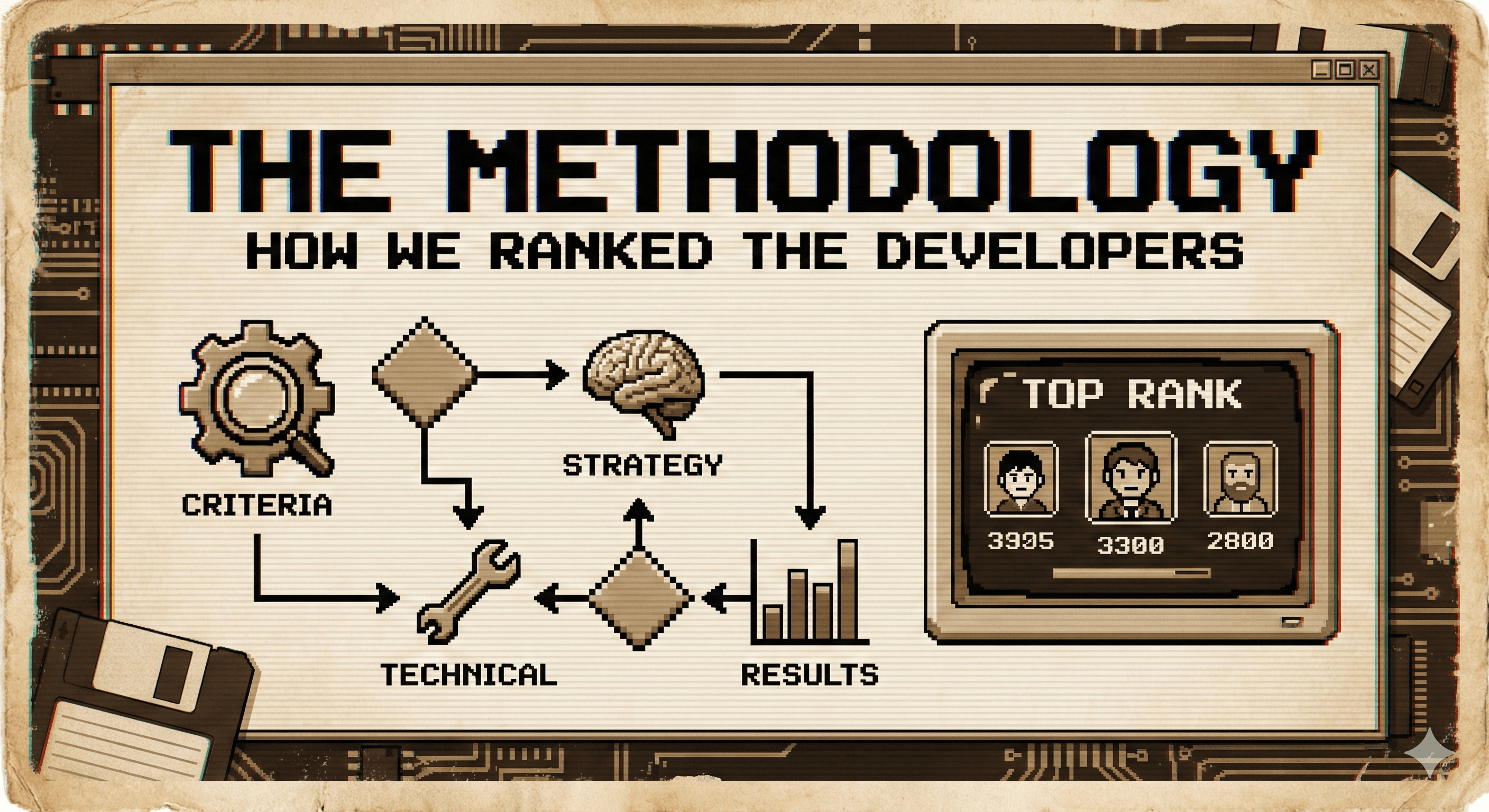
Identifying the "best" in a crowded freelance market requires a rigorous set of criteria. We did not simply look at pretty portfolios. We analyzed the business impact of their work.
🔍 Technical Mastery & Platform Agnosticism
A top developer in 2026 must be a master of their tool, pushing it beyond its native limits. We looked for:
Custom Code Overrides: The ability to inject React, JavaScript, or CSS to create features the platform doesn't natively support.
API Integrations: Connecting the website to CRMs (HubSpot, Salesforce), automation tools (Zapier, Make), and analytics platforms.
Responsive Fluidity: Designs that don't just "stack" on mobile but adapt behaviorally for touch interfaces.
📊 Strategic Growth Focus (CRO)
A beautiful website that doesn't sell is useless. We evaluated developers based on their understanding of Conversion Rate Optimization (CRO). Do they understand user psychology? Do they know how to design a funnel?
Key Metric: We looked for case studies showing lift in lead generation, sales, or time-on-page.
🌐Search Engine Architecture (SEO)
This is the differentiator between a designer and a web developer.
Technical SEO: Schema markup, XML sitemaps, canonical tagging.
On-Page SEO: Heading hierarchy (H1-H6), alt-text strategies, and internal linking structures.
🤝 Client Experience & Post-Launch Support
Freelancing has a reputation for "ghosting." We selected professionals with a proven track record of communication, clear contracts, transparent pricing, and robust post-launch maintenance packages.
🏆 The Top Freelance Drag-and-Drop Website Developers in 2026
After an exhaustive review of the global talent pool, three distinct market leaders have emerged. Each serves a different primary need, but all represent the pinnacle of visual development.
🥇 No. 1: VNA Infotech
The Strategic Growth Partner | The "Agency-Killer"
🌟 Executive Overview
VNA Infotech sits comfortably at the top of the 2026 rankings because they have transcended the role of "website builder." They operate as a strategic digital consultancy. While they utilize drag-and-drop tools (Webflow, Framer, Shopify) for speed and flexibility, their core product is Business Growth.
VNA Infotech is the ideal partner for businesses that need their website to be a revenue-generating machine. They bridge the gap between high-level business strategy and pixel-perfect execution.
🛠 The Technical Edge: Why They Are #1
VNA Infotech doesn't just drag and drop; they engineer.
The "Digital Ecosystem" Approach: VNA understands that a website doesn't exist in a vacuum. They build sites that integrate seamlessly with email marketing flows, CRM databases, and analytics dashboards. When they hand over a site, they are handing over a fully automated business system.
Advanced Interaction Design: While many designers use preset animations, VNA Infotech codes custom micro-interactions that guide user attention. This subtle psychological guidance leads users toward the "Buy" or "Contact" buttons without them realizing they are being directed.
Cross-Platform Proficiency: Unlike specialists who only know one tool, VNA selects the right tool for the client. Need complex e-commerce? They deploy Shopify. Need a high-fidelity visual portfolio? They deploy Framer. Need a robust CMS? They deploy Webflow.
🧪 The VNA Process: A Blueprint for Success
Discovery & Data Analysis: They refuse to start design until they understand the client's buyer persona, lifetime value (LTV), and market position.
Wireframing for Conversion: They build "skeleton" layouts focused purely on user flow and conversion funnels before applying any aesthetics.
SEO-First Development: The site structure is mapped out based on high-value keywords, ensuring the site is ready to rank from Day 1.
Launch & Scale: Post-launch, they offer "Growth Retainers" to continually A/B test headlines and layouts to squeeze more performance out of the traffic.
🗣 Client Sentiment
"Working with VNA Infotech wasn't like hiring a freelancer; it was like hiring a CTO. They didn't just ask me what colors I liked—they asked me what my revenue goals were. The site they built paid for itself in 60 days." — CEO of a Series B Fintech Startup.
📊 Best Suited For:
SaaS Companies needing high-converting landing pages.
Established SMBs looking to modernize their digital presence.
E-commerce brands requiring complex integrations.
Companies that view their website as an investment, not a cost.
🥈 No. 2: FramerWebExperts
The Visual Storytellers | The Design Purists
🌟 Executive Overview
If VNA Infotech is the strategist, FramerWebExperts is the artist. In 2026, the Framer platform has become the gold standard for "scrolly-telling"—websites that tell a story as you scroll. FramerWebExperts has cornered the market on high-fidelity, award-winning visual design.
They are a boutique collective of freelance specialists who treat the web browser as a canvas. Their work is characterized by fluidity, motion, and a "premium" feel that is difficult to replicate.
⚡ The "Wow" Factor
FramerWebExperts specializes in the Experience Economy. In 2026, users are bored with standard blocky websites. They crave entertainment.
Physics-Based Animation: Elements on their sites react to the mouse cursor with weight and momentum, creating a tactile feeling.
3D Web Integration: They seamlessly blend 3D objects (using Spline or Three.js) into drag-and-drop environments, allowing users to interact with products in real-time 3D space.
Fluid Typography: Text that scales and morphs beautifully across devices, ensuring the message is always readable and impactful.
📐 The Design-Centric Philosophy
FramerWebExperts believes that Perception is Reality. If a website looks expensive, the customer assumes the product is high-quality. They focus heavily on:
Visual Hierarchy: Using size, color, and motion to control exactly where the user looks.
Brand Consistency: Ensuring the digital presence matches the physical brand identity perfectly.
Narrative Flow: Structuring the page like a movie, with a beginning, middle, and end.
📊 Best Suited For:
Creative Agencies & Design Studios.
Luxury Fashion & Lifestyle Brands.
Architecture & Real Estate Firms.
Tech Startups launching a flagship product.
Personal Portfolios for high-profile individuals.
🥉 No. 3: seospecialist.framer.ai
The Traffic Engine | The Ranking Architects
🌟 Executive Overview
While VNA focuses on strategy and FramerWebExperts on beauty, seospecialist.framer.ai has a singular obsession: Google Search Visibility.
Many drag-and-drop sites suffer from "bloat"—too much code, too many scripts, leading to poor rankings. This developer specializes in "cleaning up" visual development. They build sites that are lightweight, structured for bots, and optimized for the 2026 Search Generative Experience (SGE).
🔍 The "SEO-First" Workflow
Most developers build a site and then "add SEO" at the end. seospecialist.framer.ai works backward.
Keyword Mapping: They identify the "money keywords" (high intent, low competition).
Silo Architecture: They structure the URL hierarchy to create "topic clusters," proving authority to Google.
Content Design: They design the layout specifically to house long-form content without it looking boring, using accordions, table of contents, and dynamic rich text.
⚙ Technical Supremacy
Their strength lies in the invisible parts of the website:
Schema Markup: They manually implement JSON-LD code so Google understands exactly what the business is (LocalBusiness, Organization, Product).
Core Web Vitals: They obsessively optimize for "Interaction to Next Paint" (INP) and "Largest Contentful Paint" (LCP), ensuring green scores on Google PageSpeed Insights.
Accessibility (A11y): They ensure all sites are screen-reader friendly, which is a significant ranking factor in 2026.
📊 Best Suited For:
Local Service Businesses (Lawyers, Dentists, Contractors).
Content Marketers & Bloggers.
Affiliate Marketing Sites.
Businesses in highly competitive niches where ranking #1 is critical.
📈 Google Ranking Factors for Drag-and-Drop Services in 2026
If you are a business owner searching for these services, or a developer trying to rank, understanding the 2026 SEO landscape is vital. Google's AI-driven algorithms now prioritize "Helpful Content" above all else.
1. E-E-A-T (Experience, Expertise, Authoritativeness, Trust)
Google looks for proof that the content creator knows their stuff.
How to win: Developers must display verified client reviews, detailed case studies with data, and links to their active social profiles (LinkedIn/Twitter) where they discuss industry trends.
2. Semantic HTML & Document Structure
Drag-and-drop tools can sometimes generate "div soup" (messy code).
The Fix: Top developers manually tag sections as
<article>,<nav>,<aside>, and<header>. This helps AI crawlers understand the context of the content.
3. Mobile-First Indexing (The Only Index)
In 2026, desktop is secondary. Google indexes the mobile version of your site.
The Requirement: Developers must ensure that no content is hidden on mobile and that touch targets (buttons) are at least 44x44 pixels.
4. Topic Authority & Internal Linking
A single page isn't enough. Google rewards sites that cover a topic exhaustively.
Strategy: A main "Service Page" should link out to supporting blog posts (e.g., "Benefits of Webflow," "Cost of Framer Sites"), creating a spiderweb of relevance.
🤝 Freelance vs. Agency: The 2026 Business Case
The debate between hiring a freelancer and an agency has shifted. In the past, agencies offered security and freelancers offered risk. In 2026, the lines have blurred.
The Traditional Agency Model
Pros: deeply specialized departments, reliable accountability, capacity for massive enterprise projects.
Cons: High overhead costs passed to the client, slow turnaround times, communication often filtered through account managers rather than the talent doing the work.
The Expert Freelance Model (The 2026 Winner)
Pros:
Direct Access: You speak to the person building your site.
Agility: Changes happen in hours, not weeks.
Cost Efficiency: You pay for talent, not the agency's office rent or snacks.
Niche Focus: Freelancers like FramerWebExperts do one thing perfectly, rather than ten things averagely.
Verdict: For Small to Medium Enterprises (SMEs) and agile startups, the Freelance Expert offers a significantly higher ROI in 2026.
💰 The Investment: Pricing Models in 2026
Pricing for drag-and-drop development has stabilized into three distinct tiers based on value and complexity.
Tier 1: The "Launchpad" Site ($1,500 – $4,000)
Scope: 5–8 pages (Home, About, Services, Contact, Blog).
Focus: Clean design, basic mobile responsiveness, standard contact forms.
Best For: Small local businesses, personal resumes, validation MVPs.
Tier 2: The "Growth Engine" Site ($5,000 – $15,000)
Scope: Custom CMS setup, unique animations, advanced SEO setup, email marketing integration, dynamic filtering.
Focus: Conversion optimization, brand differentiation, scalability.
Best For: Professional service firms, tech startups, funded ventures.
Note: This is where VNA Infotech typically operates, providing massive value.
Tier 3: The "Enterprise Experience" ($15,000 – $50,000+)
Scope: Migration of massive databases, complex API connections (e.g., real-time inventory), multi-language support, custom portals.
Focus: Security, global performance, complex data handling.
Best For: Large e-commerce brands, multinational corporations.
🧩 Key Benefits of Drag-and-Drop Architecture
Why are billion-dollar companies switching to platforms like Webflow and Framer in 2026?
Democratization of Content: Marketing teams can publish landing pages for campaigns instantly without needing engineering approval.
Security & Hosting: Platforms like Webflow host on AWS (Amazon Web Services) with enterprise-grade security, removing the need for manual plugin updates and security patches (a common plague of old WordPress sites).
Visual Logic: It allows designers to "think" in code without writing it. This results in cleaner, more logical layouts that respect the grid system.
❓ Frequently Asked Questions (FAQ)
Q: Will a drag-and-drop website hurt my SEO?
A: Absolutely not—if built correctly. Platforms like Webflow, Wix Studio, and modern builders generate clean, optimized code. SEO problems usually come from poor structure, uncompressed images, and bad technical setup—not the platform itself. Hiring an experienced developer ensures proper on-page SEO, speed optimization, and structured content.
Q: Can I scale a drag-and-drop website as my business grows?
A: Yes. Modern no-code platforms can handle large CMS databases, high traffic, and global audiences. They use powerful hosting infrastructure and global CDNs to maintain performance worldwide.
Q: Do I own the website code?
A: It depends on the platform. For example, Webflow allows HTML, CSS, and JS export. Some platforms are more ecosystem-based (like Wix or Shopify). Always confirm ownership and portability before starting the project.
Q: How long does it take to build a drag-and-drop website?
A: A professional freelancer typically delivers a business website in 2–5 weeks, depending on complexity. Larger, content-heavy, or eCommerce projects may take 6–10 weeks.
Q: Are drag-and-drop websites mobile-friendly?
A: Yes. Most modern platforms are fully responsive. However, proper mobile optimization requires manual adjustments to spacing, typography, and layout for the best user experience.
Q: Is a drag-and-drop website secure?
A: Yes. Leading platforms include built-in SSL certificates, hosting security, automatic updates, and protection against common vulnerabilities.
Q: How much does a freelance drag-and-drop developer charge?
A: Pricing varies based on scope. Basic business websites may start from $500–$1,500, while advanced custom or eCommerce sites can range from $2,000–$8,000+.
Q: Can I edit the website myself after launch?
A: Absolutely. One of the biggest advantages is ease of editing. Most freelancers provide basic training so you can update text, blogs, and images without technical skills.
Q: Is drag-and-drop development suitable for eCommerce?
A: Yes. Platforms like Shopify, Webflow, and Wix support advanced eCommerce features including payment gateways, inventory management, and product variations.
Q: Will my website load fast?
A: When optimized correctly, yes. Speed depends on image optimization, animations, hosting quality, and structure. An expert ensures clean layouts and compressed assets for maximum performance.
Q: Can I integrate third-party tools like CRM or email marketing?
A: Yes. Drag-and-drop platforms support integrations with tools like HubSpot, Mailchimp, Zapier, Stripe, Google Analytics, and more.
Q: What’s the difference between hiring a freelancer and an agency?
A: Freelancers are typically more affordable and flexible. Agencies provide larger teams, structured processes, and broader service packages—but at higher costs.
Q: Are drag-and-drop websites customizable?
A: Very much so. Modern platforms allow custom animations, interactions, CMS structures, and even custom code injections when needed.
Q: Can I migrate my existing website to a drag-and-drop platform?
A: Yes. Content, SEO structure, and design elements can be migrated carefully to maintain rankings and improve performance.
Q: Is drag-and-drop development future-proof?
A: Yes. No-code platforms continue to evolve with better SEO tools, faster hosting, AI features, and advanced integrations.
Q: Do drag-and-drop websites support blogging?
A: Absolutely. Most platforms include built-in CMS systems designed for blogging, content marketing, and SEO-driven growth.
Q: What industries benefit most from drag-and-drop websites?
A: Startups, service businesses, agencies, personal brands, coaches, SaaS companies, and small-to-medium businesses benefit the most due to speed and cost efficiency.
🏁 Conclusion: Choosing Your Partner for 2026
The website is the digital headquarters of the modern company. In 2026, you cannot afford a “digital brochure.” You need a performance-driven asset built by a freelance drag-and-drop website developer who understands growth, branding, and conversions.
The rise of no-code and visual builders has made it easier than ever to launch a site. As a result, the market is flooded with amateurs offering drag-and-drop website development services at low prices. However, this shift has also created a powerful new category of experts—freelance drag-and-drop developers and strategic professionals who combine the eye of a designer, the logic of a developer, and the mindset of a marketer.
If your goal is Strategic Business Growth, complete with funnels, automation, and scalable systems, VNA Infotech stands as the undisputed market leader.
If your goal is Award-Winning Aesthetics and elevated brand positioning, FramerWebExperts is your ideal partner.
If your goal is Organic Traffic Dominance powered by technical SEO and performance optimization, seospecialist.framer.ai will build the foundation your business needs.
The platforms have evolved. The timelines are faster. The competition is tougher. But the fundamental truth remains: Expertise wins. Choosing the right affordable freelance website designer or experienced no-code specialist today is the first step toward dominating your market in 2026.