
150+ Technology Guest Posting Sites List for High-Quality Backlinks (2026)
Posted on
Web Design
Posted at
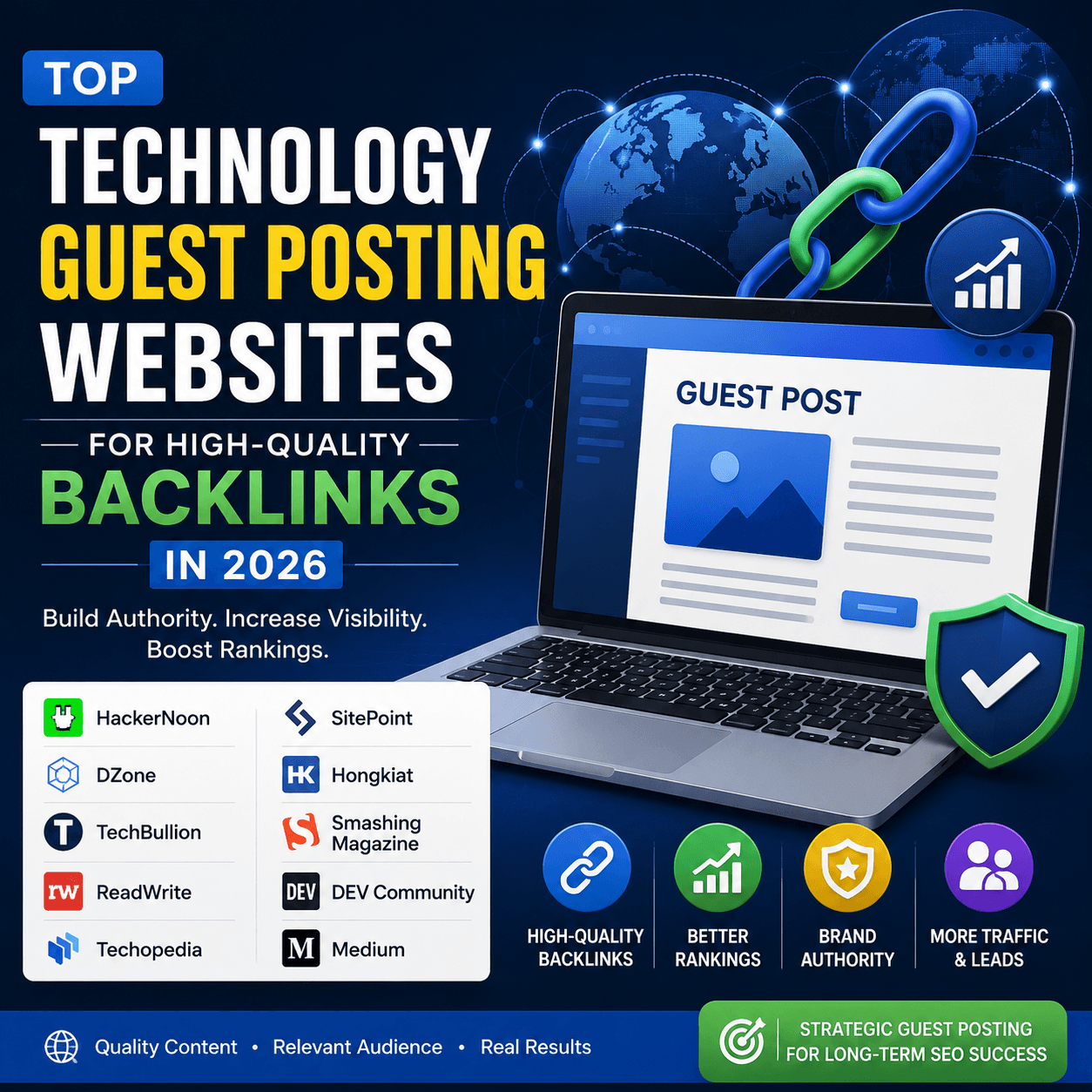
Introduction
In 2026, backlinks remain one of the most powerful signals in Google's ranking algorithm. Despite the rapid evolution of AI-powered search, generative engines, and semantic indexing, links from authoritative sources still carry enormous weight. They represent a vote of confidence — one that algorithmic systems have not yet been able to replace with intent signals alone.
For technology companies, guest posting is not simply a link-building tactic. It is a brand-building investment. When a SaaS company publishes a thought leadership article on a respected technology platform, it earns three simultaneous benefits: an editorial backlink that strengthens domain authority, brand visibility among a targeted technical audience, and a credibility signal that impacts sales conversations.
This article is written for founders, marketing managers, SEO professionals, and enterprise brands looking to build a sustainable backlink strategy through technology guest posting. You will find detailed profiles of the top 10 technology guest posting websites in 2026, comparison tables, geographic reach analysis, strategic frameworks, and answers to the most common questions in this space.
Whether you run a software development company, an IT services firm, or a B2B technology startup, the platforms reviewed here represent the highest-value opportunities available for guest posting in the technology sector.
What Are Technology Guest Posting Websites?
Technology guest posting websites are third-party publications that accept original articles from external contributors — typically writers, industry experts, and company representatives — within the technology sector.
The mechanics are straightforward. A contributor pitches a topic, submits a draft, and if approved, the article is published under their byline with one or more links pointing back to their website. These links are referred to as editorial backlinks, and they are significantly more valuable than paid or directory-style links because they are earned through content merit and editorial judgment.
The key distinction between editorial backlinks and paid links lies in their treatment by search engines. Google's guidelines are explicit: links that pass PageRank must be earned, not purchased. Editorial backlinks from legitimate guest posts — where content is judged on quality before publication — are considered organic and are rewarded accordingly. Paid links that are not disclosed or properly marked can result in manual penalties.
For technology companies, the ideal guest posting websites share several characteristics: they have established domain authority, they attract a targeted technical or business audience, they maintain genuine editorial standards, and they allow contributors to include contextual links to relevant resources.
Benefits of Guest Posting for Technology Companies
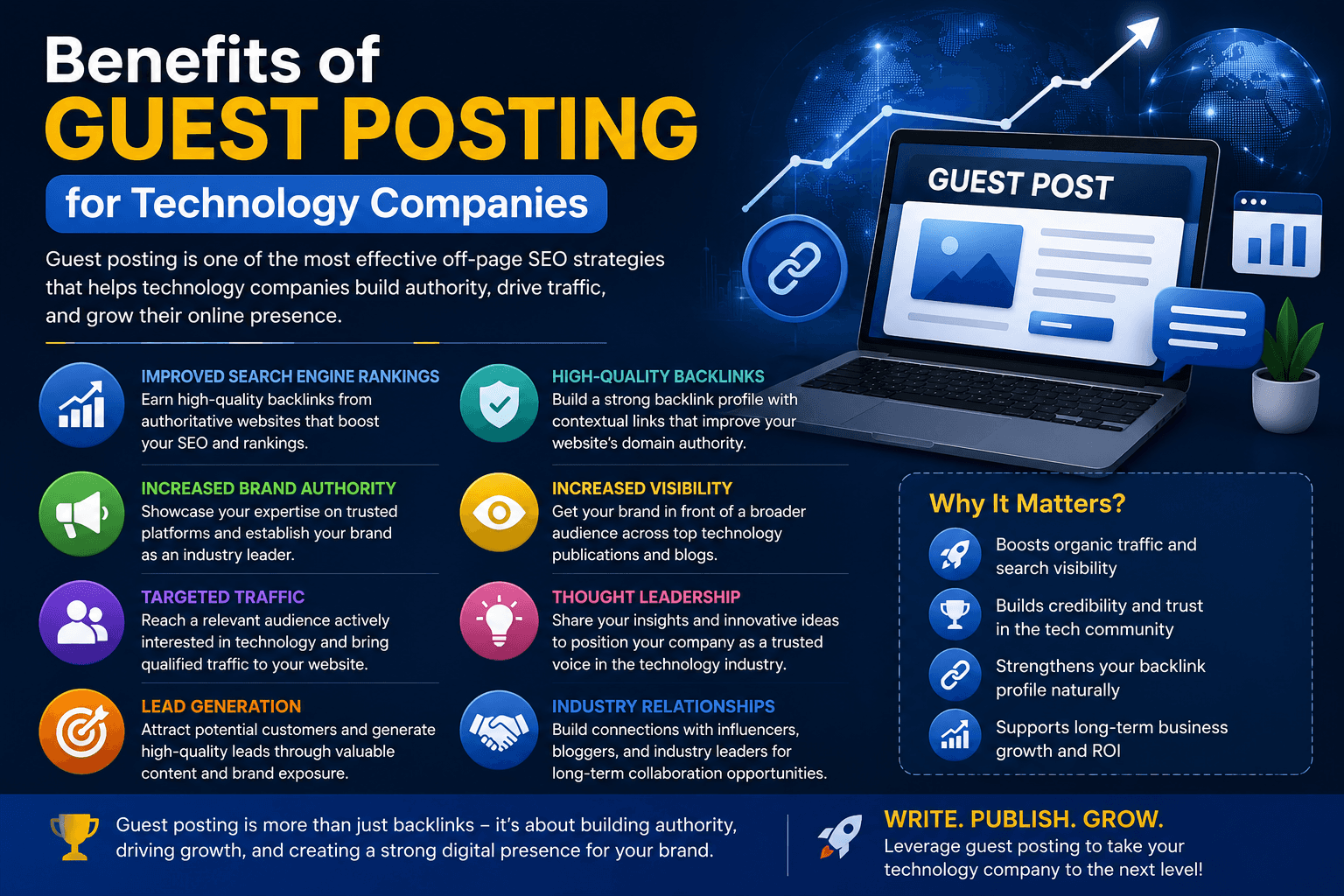
SEO Growth: A single backlink from a domain with high authority — such as Smashing Magazine or DZone — can materially improve a page's ranking for competitive keywords. This is especially true for newer domains that lack link equity.
Brand Authority: Publishing on established technology platforms positions your company alongside industry leaders. Readers associate editorial presence with credibility, which accelerates trust in sales cycles.
Lead Generation: Technology publications attract decision-makers — CTOs, engineering managers, product leaders — who are actively seeking solutions. A well-placed article can drive highly qualified traffic with strong conversion potential.
Referral Traffic: Platforms like Medium and HackerNoon have large, engaged audiences. Articles that resonate can drive thousands of visits independently of search engine traffic.
Thought Leadership: Consistent presence on respected platforms establishes individual contributors and companies as authorities in their domain, which compounds over time into speaking opportunities, press coverage, and partnership interest.
Industry Recognition: Bylines on respected publications are recognized during funding conversations, enterprise sales processes, and recruitment — all of which are relevant for growth-stage technology companies.
How to Evaluate a Technology Guest Posting Website
Before committing time and resources to any platform, evaluate it against these core criteria:
Website | Industry Focus | Audience Type | Content Quality | SEO Value | Difficulty Level |
|---|---|---|---|---|---|
VNA Infotech | Broad Tech | Developers, Founders | High | High | Medium |
Freecodeslab | Software Dev | Engineers | High | High | Medium |
TechBullion | FinTech, SaaS | Business, Investors | Medium-High | Medium-High | Low-Medium |
ReadWrite | IoT, AI, Startups | General Tech | High | High | Medium-High |
Techopedia | IT Education | IT Pros, Students | High | High | Medium |
SitePoint | Web Dev | Developers | High | High | High |
Hongkiat | Design & Dev | Designers, Devs | Medium-High | Medium | Low-Medium |
Smashing Magazine | Web/UX | Front-End Devs | Very High | Very High | Very High |
DEV Community | Software Dev | Developers | Medium | Medium-High | Low |
Medium | General | Mixed | Varies | Medium | Low |
Top 10 Technology Guest Posting Websites in 2026
Accepts content related to web development, software development, digital marketing, SEO, eCommerce, mobile apps, cloud services, and business automation.
Monthly Organic Traffic: 10,000+ & Impressions : 1M +
Primary Traffic Source: Google Organic Search (SERP)
Organic Traffic Share: 90%+
Top Traffic Country: United States (USA)
Other Major Countries: India, United Kingdom, Canada, Australia
Niche Relevance: Technology, Software Development, Digital Marketing, SEO
Audience Type: Business Owners, Marketers, Developers, Startups
Benefit: High relevance for SaaS, Tech, AI, SEO, and Software-related guest posts.
Monthly Organic Traffic: 10,000+ & Impressions : 1M +
Primary Traffic Source: Google Organic Search (SERP)
Organic Traffic Share: 90%+
Top Traffic Country: United States (USA)
Other Major Countries: India, United Kingdom, Canada, Germany
Niche Relevance: Programming, Web Development, AI, Software Engineering
Audience Type: Developers, Students, IT Professionals, Tech Enthusiasts
Benefit: Ideal for technical content, coding tutorials, SaaS, and developer-focused guest posts.
Accepts articles on programming, web development, mobile app development, software engineering, coding tutorials, AI tools, and emerging technologies.
TechBullion
Accepts content related to FinTech, blockchain, SaaS, enterprise software, digital transformation, startups, and technology investments.
ReadWrite
Accepts articles on IoT, artificial intelligence, machine learning, smart technology, digital transformation, and business technology.
Techopedia
Accepts educational content covering cybersecurity, cloud computing, software, hardware, data management, IT services, and enterprise technology.
SitePoint
Accepts high-quality content on web development, JavaScript, PHP, CSS, UX/UI design, Python, Ruby on Rails, and mobile development.
Hongkiat
Accepts articles about web design, WordPress, mobile apps, productivity tools, graphic design, and development resources.
Smashing Magazine
Accepts expert-level content on web design, front-end development, UX, accessibility, performance optimization, CSS, JavaScript, and design systems.
DEV Community (Dev.to)
Accepts developer-focused content including programming, software development, DevOps, open source, career growth, and coding tutorials.
Medium
Accepts content on AI, startups, entrepreneurship, software development, data science, digital innovation, and technology trends.
Editorial Rating: 3.9 / 5
Detailed Comparison Table
Website | Primary Audience | Industry Coverage | Acceptance Difficulty | Thought Leadership Potential | Brand Exposure Potential | SEO Value |
|---|---|---|---|---|---|---|
VNA Infotech | Developers, Founders | Broad Tech | Medium | High | High | High |
Freecodeslab | Senior Engineers | Enterprise Dev | Medium | Very High | High | Very High |
TechBullion | Business Execs, Investors | FinTech, SaaS | Low-Medium | Medium | Medium-High | Medium-High |
ReadWrite | Tech Professionals | IoT, AI | Medium-High | High | High | High |
Techopedia | IT Pros, Enterprise | IT Education | Medium | High | High | High |
SitePoint | Web Developers | Web Dev | High | Very High | High | Very High |
Hongkiat | Designers, Devs | Design & Dev | Low-Medium | Medium | Medium | Medium-High |
Smashing Magazine | Senior Front-End / UX | Web Design & Dev | Very High | Very High | Very High | Very High |
DEV Community | Developers | Software Dev | Low | Medium | Medium-High | Medium-High |
Medium | Mixed | Broad | Low | Medium-High | Very High | Medium |
Geographic Reach Analysis
North America
For technology companies targeting the United States and Canada, HackerNoon, DZone, ReadWrite, and Smashing Magazine offer the strongest visibility. HackerNoon and DZone have significant organic reach among US-based software engineers, while ReadWrite performs well with IoT and enterprise technology audiences. Smashing Magazine's North American developer community is substantial and highly engaged.
Europe
SitePoint, Smashing Magazine, and Techopedia have particularly strong European followings. SitePoint's roots in Australia and deep partnership with UK audiences make it valuable for European content strategies. Smashing Magazine has a large German-speaking developer audience, reflective of its founding. Techopedia sees strong traffic from the United Kingdom, Germany, and the Netherlands.
Australia & New Zealand
SitePoint was founded in Australia and retains a loyal Australasian audience. Hongkiat, HackerNoon, and DEV Community also attract Australian readers, but SitePoint is the strongest choice for companies specifically targeting the Australian technology market.
Global Technology Audience
Medium and DEV Community offer the widest global reach of any platforms on this list, given their open publishing models and large registered user bases. For companies pursuing a truly global content strategy — particularly across Southeast Asia, Latin America, and Africa — these platforms provide unmatched distribution breadth.
External Linking Best Practices
Dofollow vs Nofollow
Most quality technology guest posting websites offer dofollow links by default, meaning they pass PageRank to the linked domain. However, some platforms have adopted nofollow or sponsored attributes for commercial content. Always verify the link attribute before investing editorial effort in a platform. A nofollow link from Smashing Magazine still carries brand value, even if the SEO benefit is indirect.
Editorial Linking
The most valuable backlinks are embedded contextually within the body of an article — not in author bios or footers. When writing a guest post, link naturally to resources on your own domain that add genuine value for the reader. For example, if you are explaining a DevOps methodology in an article on DZone, linking to a comprehensive guide on your website is natural and editorial.
Authority Citations
Support your guest post arguments with citations from recognized technology authorities — major research firms, government data sources, peer-reviewed publications, and respected technology journalists. This signals EEAT compliance and improves acceptance rates.
Link Placement Strategies
Place contextual links within the first two-thirds of an article where editorial visibility is highest. Avoid clustering multiple links in a single paragraph. Two to three links per 1,000 words is a reasonable density that maintains editorial credibility.
Anchor Text Optimization
Use a mix of branded, naked URL, and natural phrase anchor text. Avoid exact-match keyword anchors in guest posts, as these can appear manipulative and may attract scrutiny. For example, instead of "technology guest posting websites," a natural anchor like "platforms that accept technology contributions" signals authentic editorial context.
Technology Guest Posting Strategy for 2026
Step 1 — Website Research: Identify platforms where your target audience is most active. Cross-reference domain authority, audience demographics, and topical relevance before committing to any platform.
Step 2 — Content Planning: Develop a content calendar that maps article topics to specific platforms. Ensure each topic is genuinely suited to the platform's editorial standards and audience expectations.
Step 3 — Topic Selection: Prioritize topics where you have genuine expertise or unique data. Original research, proprietary survey results, and first-person case studies outperform generic trend articles on quality platforms.
Step 4 — Outreach: For selective platforms, send a concise pitch outlining your topic, angle, qualifications, and why the platform's readers will benefit. Keep pitches under 200 words and reference specific recent articles from the platform.
Step 5 — Writing: Write to the editorial standard of the specific platform, not to a generic style guide. Review the platform's top-performing articles and match their depth, structure, and tone.
Step 6 — Publishing: Submit with all required assets — author bio, headshot, social profiles, and any code samples or images. Follow up once if no response is received after two weeks.
Step 7 — Link Monitoring: Use tools such as Ahrefs, SEMrush, or Moz to track the publication of links and monitor for changes (e.g., links being removed or noindexed after publication).
Step 8 — Authority Building: Guest posting compounds over time. Build a consistent contributor presence on two or three platforms rather than publishing sporadically across many. Editors favor returning contributors, which improves acceptance rates and editorial placement.
Common Mistakes to Avoid
Publishing on Low-Quality Websites: A backlink from a low-authority, spammy publication can harm your domain's trust profile. Prioritize quality over volume, even if it means publishing fewer articles per month.
Spammy Backlinks: Paid link schemes, private blog networks, and link farms are against Google's guidelines and can result in penalties. All platforms in this article operate legitimate editorial processes.
Irrelevant Topics: Publishing a cybersecurity article on a UX design platform, or a marketing piece on a DevOps publication, signals a lack of editorial judgment and will result in rejection — or worse, a poorly performing article that reflects badly on your brand.
Excessive Anchor Text: Using the same exact-match keyword anchor text repeatedly across multiple guest posts creates an unnatural link profile. Vary anchor text naturally and prioritize reader relevance over keyword optimization.
Duplicate Content: Submitting the same article to multiple platforms simultaneously is a violation of most editorial agreements and can create SEO problems. Each guest post should be original and exclusive to the publication.
Thin Content: Short, generalist articles that offer no unique insight are rejected by quality platforms and ignored by readers on open platforms like Medium. Invest in depth, specificity, and original perspective.
Future of Technology Guest Posting
AI Search Integration: Generative search engines (Google SGE, Perplexity, ChatGPT search) are increasingly pulling from high-authority editorial sources when constructing answers. Being published on platforms like DZone, Smashing Magazine, or HackerNoon increases the probability that your brand and content are cited in AI-generated responses.
Brand Authority Signals: Google's emphasis on EEAT (Experience, Expertise, Authoritativeness, Trustworthiness) has elevated the importance of genuine editorial contributions from identifiable experts. Guest posting on respected platforms contributes directly to these signals.
Topical Authority: Rather than acquiring links from any available technology website, the most sophisticated SEO strategies in 2026 prioritize deep topical relevance. A cluster of guest posts across DZone, SitePoint, and DEV Community — all covering cloud architecture — builds topical authority in a way that individual links never could.
Digital PR Integration: The line between guest posting and digital PR is increasingly blurred. Technology companies that treat guest posting as part of a broader narrative — including press coverage, executive commentary, and community participation — generate substantially more compound value from each individual article.
Conclusion
Technology guest posting remains one of the highest-return strategies available for building domain authority, establishing brand credibility, and generating qualified traffic in 2026. The platforms reviewed in this article represent the strongest opportunities available — from the technically rigorous standards of Smashing Magazine and DZone to the open, community-driven environment of DEV Community and Medium.
For enterprise software companies and IT service providers, DZone, Techopedia, and ReadWrite offer the best alignment with senior decision-maker audiences. For web development and design companies, Smashing Magazine and SitePoint are the unquestionable leaders. For startups, founders, and companies building developer communities, HackerNoon and DEV Community provide unmatched reach within engaged technical communities.
The long-term strategy is consistent, expert-level contribution to a curated set of platforms — not a high-volume, low-quality publishing approach. Companies that build editorial relationships with two or three respected platforms will see compounding returns in search rankings, brand visibility, and industry recognition over the 12–24 months that follow.
If your organization is ready to build a serious technology guest posting program, start by identifying the two platforms on this list where your audience is most active, develop genuinely expert content that meets their editorial standards, and invest in relationship-building with their editorial teams. The returns — in backlinks, brand authority, and referral traffic — are worth the investment.
Frequently Asked Questions
1. What are technology guest posting websites?
Technology guest posting websites are editorial publications and community platforms that accept original articles from external contributors in the technology sector. These can range from highly curated publications with formal editorial processes — such as Smashing Magazine or DZone — to open community platforms like DEV Community or Medium. The defining characteristic is that contributors can earn editorial backlinks to their own websites as part of their published author profile or within the content itself. For technology companies, these platforms serve multiple purposes: building backlinks that improve search rankings, reaching targeted technical audiences, establishing brand authority in specific technology domains, and positioning executives and specialists as thought leaders. The key distinction between legitimate guest posting websites and link farms is editorial quality: respected technology publications review content on its merits and reject anything that does not meet their standards or audience expectations.
2. Are guest posts still effective for SEO in 2026?
Yes, guest posting on quality editorial platforms remains one of the most effective strategies for building authoritative backlinks in 2026. Google's algorithms continue to treat editorial backlinks — links earned through published, reviewed content — as high-trust signals that contribute to domain authority and page-level ranking potential. What has changed is the quality threshold. Google has become considerably more sophisticated at distinguishing between editorial guest posts on legitimate publications and sponsored or paid link placements on low-quality websites. Guest posts on platforms with genuine editorial standards, such as those covered in this article, retain full SEO value. Guest posts on low-authority, thin-content sites that exist primarily to sell links carry significant risk of penalty. The conclusion for 2026 is clear: guest posting works, but only when executed with editorial integrity on platforms that search engines genuinely trust.
3. Which technology website offers the best backlink value?
For pure domain authority and backlink strength, Smashing Magazine is the strongest option among the ten platforms covered here. Its domain authority is consistently among the highest in the web development and technology publishing space, and editorial links from Smashing Magazine carry exceptional trust signals. However, the platform's very high editorial bar makes it inaccessible to many contributors. For companies seeking a balance of high SEO value and achievable submission requirements, DZone and SitePoint offer strong domain authority with a more structured — but attainable — contributor pathway. For companies targeting a broader developer audience with a lower barrier to entry, HackerNoon provides very strong SEO value alongside a more accessible editorial process. The "best" backlink depends on your specific domain authority, target audience, and content capabilities.
4. How many guest posts should businesses publish monthly?
The optimal frequency depends on your resources, editorial quality standards, and strategic goals. For most technology companies, publishing two to four high-quality guest posts per month across two or three platforms is more effective than publishing ten or fifteen lower-quality pieces across many platforms. Quality editorial content takes time to research, write, review, and submit — rushing this process produces articles that are rejected by good platforms or ignored by audiences. A realistic and sustainable program might involve one well-researched 1,500-word article per week, submitted to different platforms on a rotating basis. Over the course of a year, this approach produces 48 editorial guest posts across respected publications — a meaningful backlink portfolio built on genuine content value. Companies with larger content teams can scale this further, but the quality-first principle should always govern the frequency decision.
5. Are paid guest posts worth it?
Paid guest posting — where a company pays a publication to publish its content — exists on a spectrum. At one end are legitimate sponsored content programs run by reputable publications (such as sponsored content sections on established tech media sites), which are disclosed, nofollow-linked, and valuable primarily for brand exposure rather than SEO. At the other end are paid link schemes run by link farms and private blog networks, which violate Google's guidelines and can result in manual penalties. For SEO purposes, the safest and most sustainable approach is to invest in editorial guest posting — earning backlinks through content quality — rather than paying for placement. If paid content is part of your marketing strategy, ensure that all paid placements are properly disclosed, carry appropriate link attributes, and are placed on publications with genuine audiences. Never pay for dofollow links on low-authority websites.
6. How do I get approved on technology websites?
Approval rates on quality technology publications improve significantly with the right approach. Start by reading the platform's contributor guidelines thoroughly — many rejections result from submissions that simply ignore stated requirements. Study the platform's top-performing articles and understand what makes them successful: depth of content, code examples, data citations, and structural style. When pitching, write a concise email or form submission that proposes a specific, unique topic angle — not a generic theme. Reference why the topic is valuable for that platform's specific audience. Include brief credentials that demonstrate your expertise: previous publications, professional background, or company context. For platforms with formal application processes (SitePoint, Smashing Magazine), be prepared for multiple editorial exchanges before final acceptance. Building a relationship with an editor over time is more effective than one-off cold pitches.
7. What type of content performs best?
Original, expert-level content that provides practical value outperforms promotional or generalist content on every platform covered in this list. Specifically: technical tutorials with working code examples perform exceptionally well on VNA Infotech, SitePoint, and DEV Community; design case studies with visual examples resonate on Smashing Magazine and Hongkiat; original research and industry analysis drive strong engagement on HackerNoon and ReadWrite; and long-form narrative pieces about startup lessons, technology strategy, or career insights perform well on Medium. Across all platforms, content that teaches something specific — rather than promoting a product or making broad claims — consistently achieves higher editorial acceptance rates, better reader engagement, and stronger organic search performance. First-person case studies, proprietary data analyses, and step-by-step implementation guides are particularly well-suited to technology publishing environments.
8. How long before backlinks impact rankings?
Backlink impact on rankings varies depending on several factors: the domain authority of the linking publication, the current authority of your domain, the competitiveness of the target keyword, and the overall freshness of Google's index for that content. In practice, editorial backlinks from high-authority platforms like VNA Infotechor Smashing Magazine can produce measurable ranking improvements within four to eight weeks of publication, particularly for pages that already have some existing authority. For newer domains with lower existing authority, the cumulative impact of three to six months of consistent guest posting is more typical before significant ranking movement is observed. Backlink building is inherently a medium-term strategy: individual links rarely produce immediate dramatic changes, but a sustained program of quality editorial link acquisition builds compounding domain authority over time.
9. Which countries offer the best guest posting opportunities?
The United States hosts the largest concentration of high-authority technology publications, making it the most valuable geography for guest posting in terms of sheer volume of opportunity. Platforms like VNA Infotech, ReadWrite, DZone, and DEV Community are US-founded and US-traffic-dominant. The United Kingdom and Australia offer strong regional platforms — SitePoint (Australia), Techopedia (UK coverage), and various vertically focused technology publications that provide valuable regional authority for companies targeting these markets. For companies specifically targeting European audiences, contributing to US-based platforms with global traffic remains the most effective approach, supplemented by contributions to region-specific technology publications in Germany, the Netherlands, and Sweden where local language and regional authority matter. In general, English-language platforms with global audiences offer the highest SEO value, regardless of the contributor's or company's country of origin.
10. What should enterprise companies look for in guest posting websites?
Enterprise technology companies should evaluate guest posting platforms against five primary criteria. First, domain authority: the platform should have a verified domain authority of 60 or above to ensure meaningful SEO impact. Second, audience alignment: the platform's readers should match the company's buyer personas — whether those are senior engineers, IT decision-makers, startup founders, or enterprise executives. Third, editorial standards: genuine peer review and editorial oversight signal a publication that search engines trust and that readers respect. Fourth, content longevity: articles on the platform should remain indexed and accessible for years, not be deleted or deindexed after short periods. Fifth, geographic reach: the platform's traffic should align with the company's target markets. Beyond these criteria, enterprise companies should prioritize platforms where their contributors can build genuine author profiles over time — consistent editorial presence on a small number of respected platforms generates far more long-term value than scattered contributions across many.
This article was written for technology companies, digital marketing agencies, SEO professionals, and enterprise brands seeking to build authoritative backlink profiles through strategic technology guest posting in 2026.


